UNIST has announced that is biomedical engineering researchers have entered into a partnership with the Circle Foundation to develop a novel treatment for Nontuberculous Mycobacteria (NTM) lung disease—a chronic infection that has been challenging to treat due to long treatment durations and high recurrence rates.
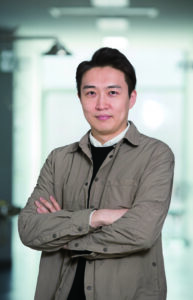
Professor Joo Hun Kang (Dept. of Biomedical Eng., UNIST)
Professor Joo Hun Kang and his research team from the Department of Biomedical Engineering have been selected to receive funding through the ‘2025 Innovation Science and Technology Centers and Programs (Public Invitation Projects)‘ by the Circle Foundation with a focus on developing advanced therapies for NTM lung disease. Through the project, they will be receiving an annual research budget of KRW 300 million, with progress evaluations scheduled each year until 2028.
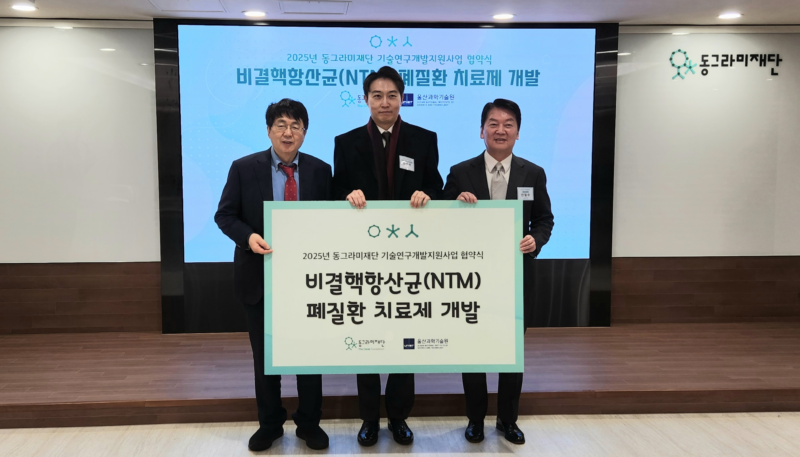
The signing ceremony took place at the Open Challenge Lab of Circle Foundation in Seoul on December 31, 2025. Attendees included Founder Cheol-Soo Anh and Chairman Soon-Heung Chang from the Circle Foundation, and Professor Joo Hun Kang and Postdoctoral Researcher Sung Jin Park from UNIST, among others.
NTM lung disease is caused by environmental bacteria, not the tuberculosis bacteria, and cases are rising rapidly both domestically and globally. Treatment typically involves lengthy courses of multiple antibiotics—often over a year—with significant side effects and a high chance of relapse. These challenges have underscored the urgent need for safer, more effective therapeutic options.
Building on this context, Professor Kang’s team plans to leverage insights into the biology of NTM bacteria to design innovative treatment mechanisms. Moving beyond traditional antibiotics, they aim to develop therapies that can target the disease more precisely, potentially reducing treatment times and side effects, and improving patients’ quality of life.
During the event, Founder Cheol-Soo Anh of the Circle Foundation emphasized the importance of this research. “This project tackles a difficult medical challenge that has long lacked adequate support,” he said. “We hope this effort will open new horizons in the fight against NTM infections and lead to meaningful advances in treatment.”
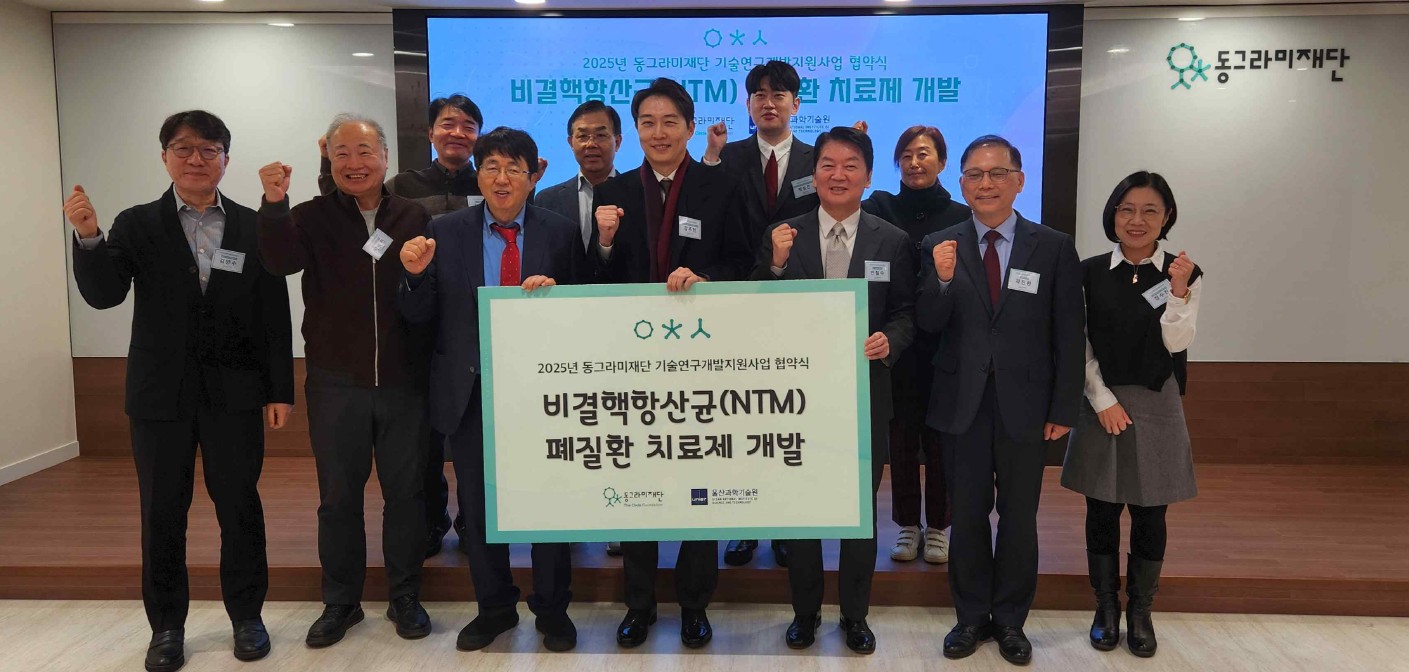
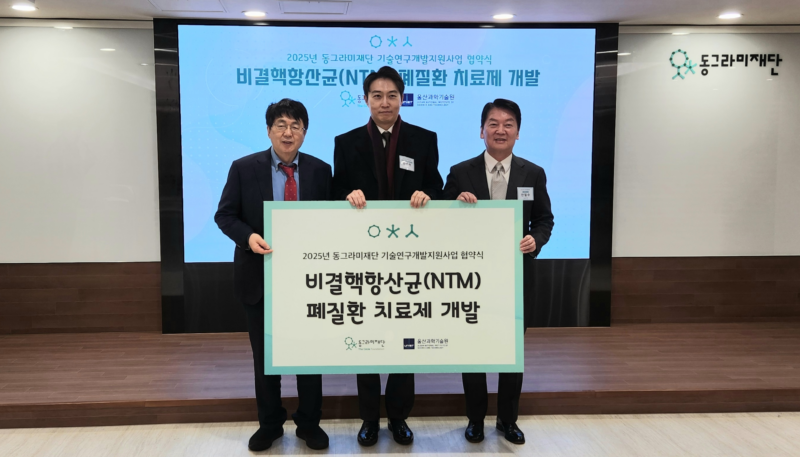
Participants of the MoU signing ceremony between UNIST and the Circle Foundation took a commemorative photo.
Professor Kang outlined his team’s strategic approach, sharing plans to identify novel therapeutic targets and develop a phased research roadmap toward clinical application. The discussion also touched on potential collaborations to develop public health technologies and accelerate real-world impact.
Expressing appreciation for the support, Professor Kang remarked, “This funding enables us to pursue ambitious research with the potential to overcome current treatment limitations. Our ultimate goal is to deliver innovative therapies that meet unmet medical needs and can be applied effectively in clinical settings.”
Since its establishment in 2020, the Circle Foundation has supported research aimed at tackling major social challenges, including public health issues, cybersecurity, and climate change. In addition to funding, the foundation runs programs, such as the Circle Foundation TEU MED, which cultivates medical innovators and the CircleUp AI Academy, dedicated to advancing AI skills.




![[2026 UNIST Matriculation] “Design Questions the World Has Never Seen!”](https://news.unist.ac.kr/wp-content/uploads/2026/02/사진-박종래-UNIST-총장이-2026년-입학식사를-전하고-있다-1-1-190x122.jpg)