Students from leading universities in the United States and Korea gathered for a hands-on academic exchange that combined joint research presentations with visits to major industrial sites in Ulsan.
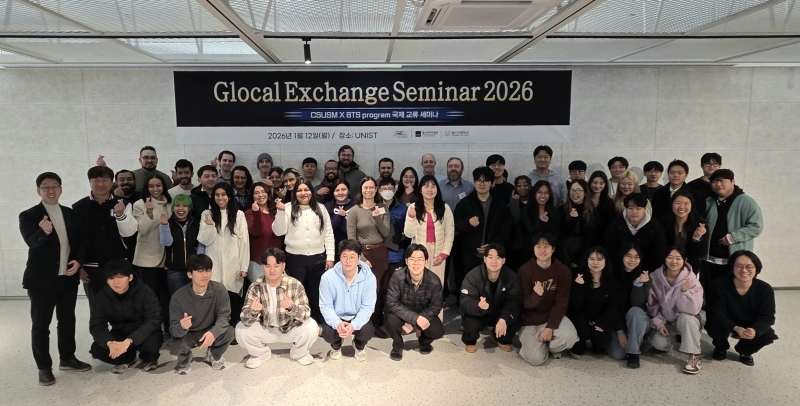
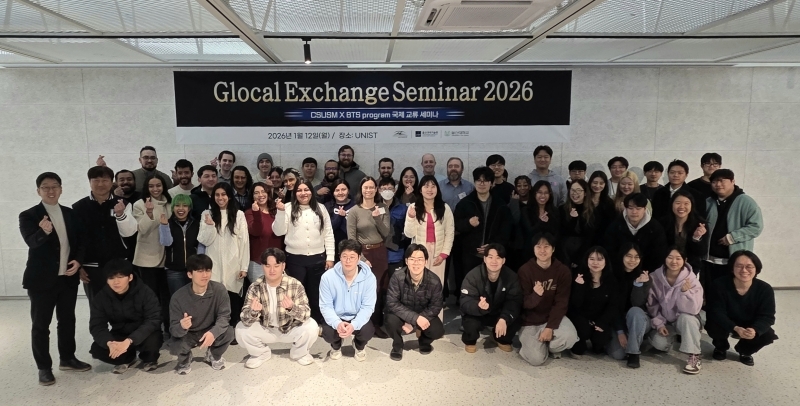
On January 12, the UNIST College of Engineering hosted an international research exchange seminar at the University-Industry Cooperation Building of UNIST, bringing together master’s students from California State University San Marcos (CSUSM) and students participating in the B.T.S (Brain to Society) IFRP (Industry-Friendly Research Project) Program from UNIST and the University of Ulsan (U of U).
The event drew approximately 30 CSUSM faculty members and graduate students, along with about 40 students from UNIST and U of U enrolled in the B.T.S IFRP Program. Participants shared research outcomes, exchanged technical perspectives, and discussed opportunities for future collaboration through presentations and open discussions.
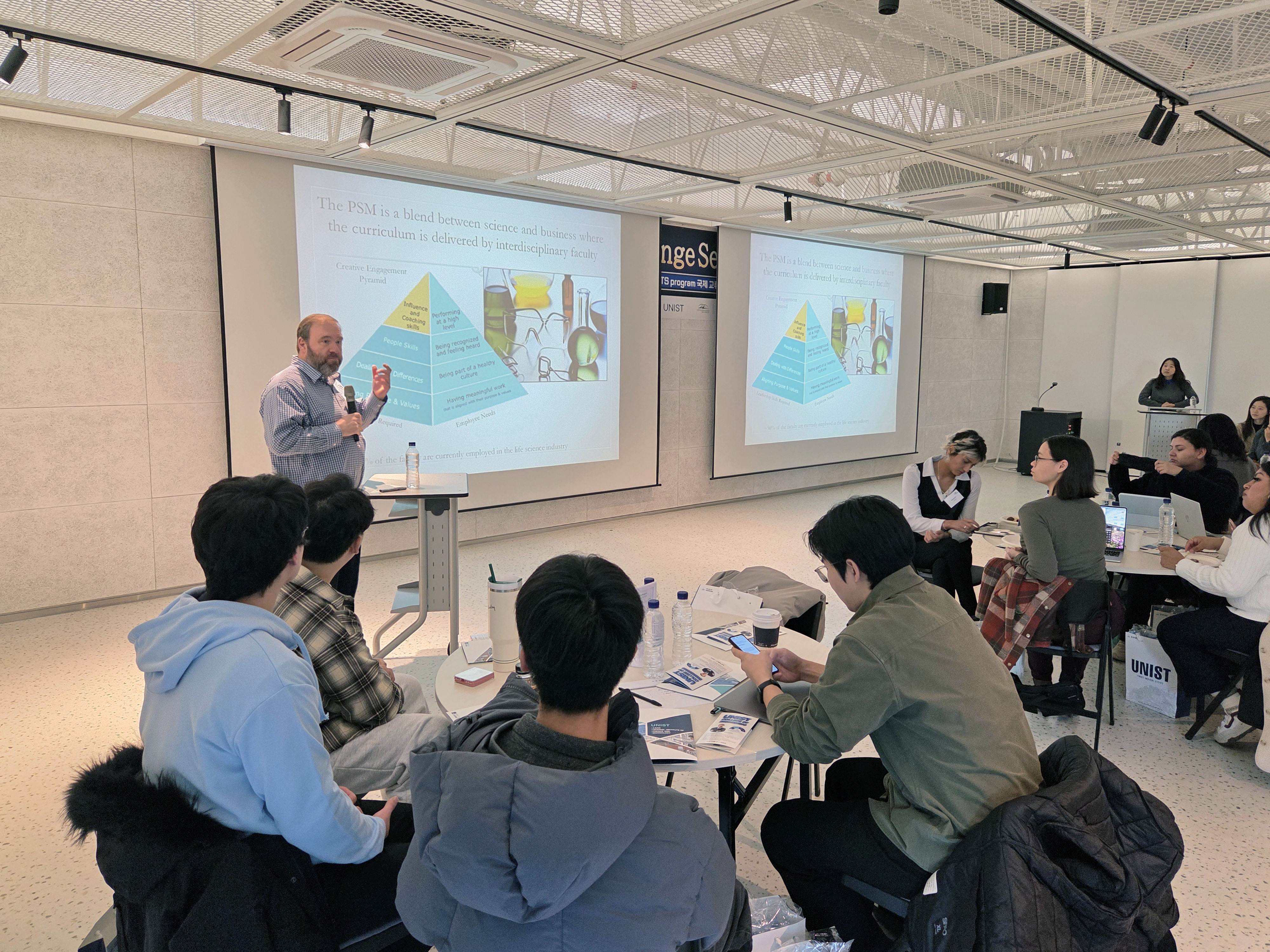
Professor Alan Styles of CSUSM shares recent findings from an international research collaboration.
Professor Alan Styles of CSUSM presented recent research conducted through international collaboration, followed by project presentations from award-winning teams from B.T.S. IFRP Program. The teams introduced their work from initial problem identification through implementation, prompting active discussion on technical depth and real-world applicability.
The program also highlighted examples of research extending beyond the laboratory. UNIST student startup Thyroscope Inc. shared its experience in technology commercialization, offering a concrete exxample of how academic research can be translated into practical applications. A networking session followed, during which participants explored possibilities for continued collaboration, including joint research, student exchanges, and graduate study pathways.
In the afternoon, participants visited major industrial sites in Ulsan, including Hyundai Motor Company and HD Hyundai Heavy Industries. The visits provided firsthand insight into how research and technology are applied in large-scale manufacturing environments, deepening participants’ understanding of Korea’s industrial and R&D landscape.
Dean Yong Hwan Kim of the UNIST College of Engineering said, “We will continue to expand education and research programs built on international exchange, with the goal of nurturing engineers who can thrive and compete in a global environment.”