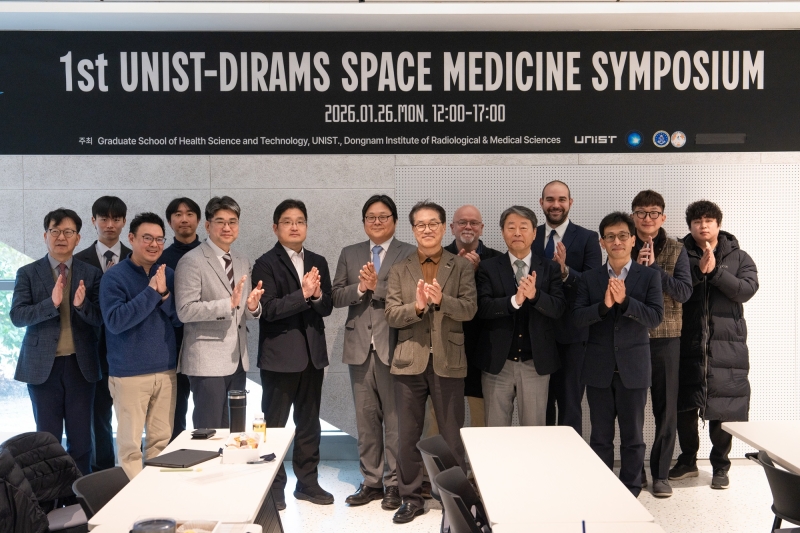
UNIST Graduate School of Health Science and Technology (HST) and the Dongnam Institute of Radiological & Medical Sciences (DIRAMS) jointly hosted the ‘1st UNIST-DIRAMS Space Medicine Symposium‘ at the University–Industry Cooperation Building on January 26, 2026. The event brought together leading space medicine experts nationwide, marking a new step in domestic collaboration.
The symposium served as the first formal platform for cooperation between the two institutions in the field of space medicine. About 80 researchers and officials attended, including representatives from UNIST, DIRAMS, and the Korea Institute of Radiological and Medical Sciences (KIRAMS).
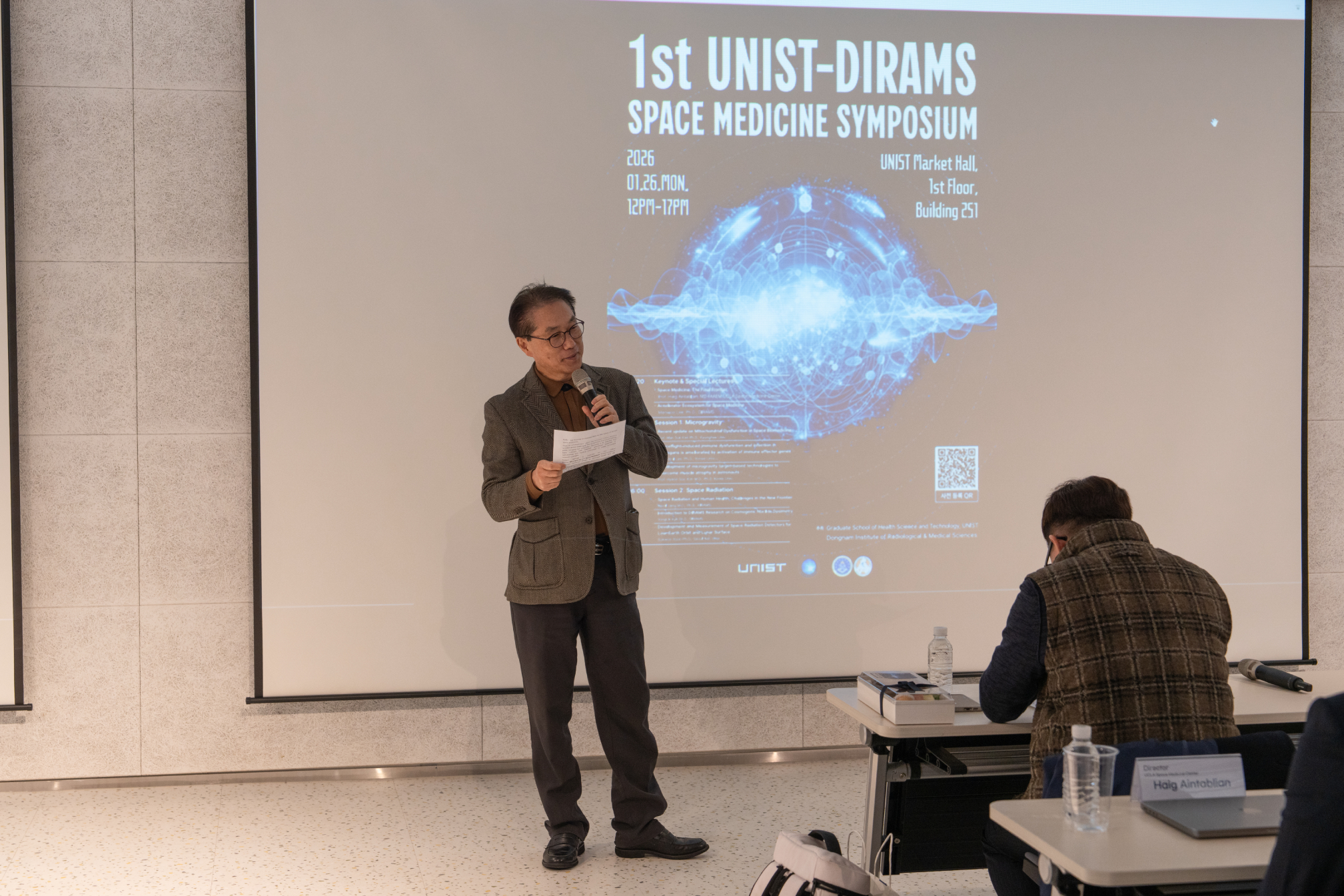
UNIST President Chong Rae Park is delivering a welcome remark at the symposium on January 26, 2026.
The event was organized to share recent research findings and strengthen collaboration on understanding how space environments affect human health. Participants exchanged views on medical risks associated with spaceflight and explored ways to translate research outcomes into future missions.
The program opened with welcome remarks from UNIST President Chong Rae Park and DIRAMS President Chang-hun Rhee, who highlighted the growing importance of space medicine as a key research field for future space activities.
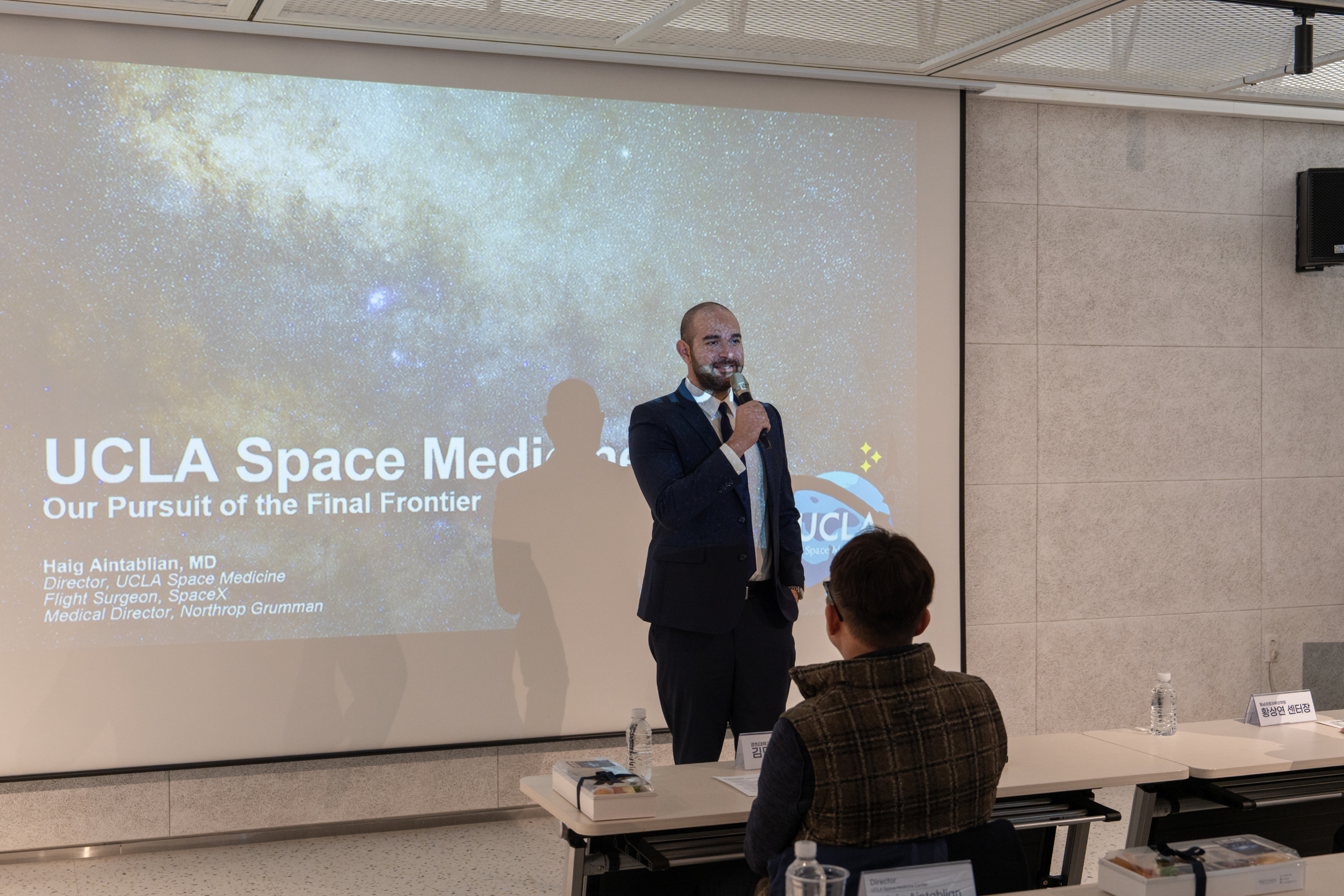
Professor Haig Aintablian, Director of the UCLA Space Medicine Center, delivered a keynote under the theme “Our Pursuit of the Final Frontier.”
The keynote lecture was delivered by Professor Haig Aintablian, Director of the UCLA Space Medicine Center, under the theme “Our Pursuit of the Final Frontier.” He outlined key physiological changes experienced in space and emphasized the need for continued medical research to support human activity beyond Earth.
Dr. Manwoo Lee of DIRAMS followed with a presentation on regional accelerator-based research infrastructure and its potential role in advancing space medicine studies.
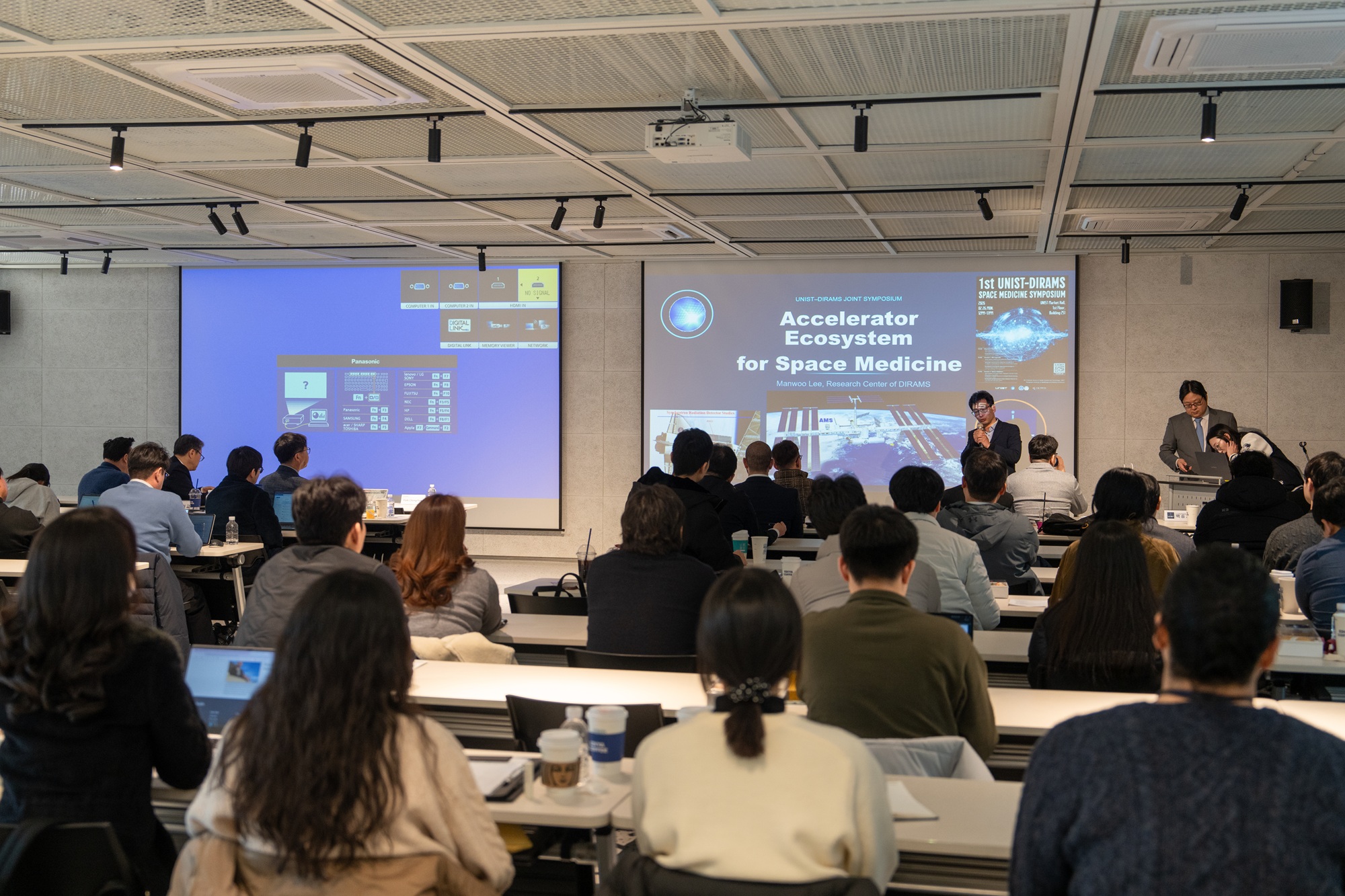
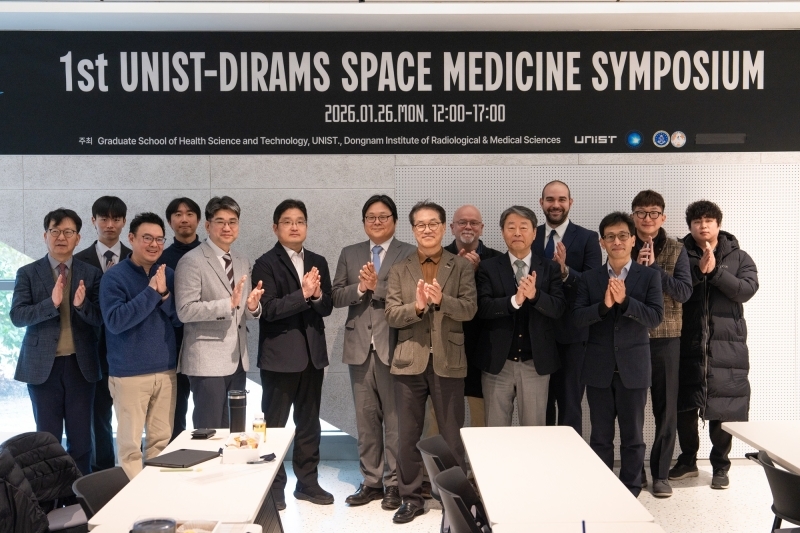
The ‘1st UNIST-DIRAMS Space Medicine Symposium’ at the University–Industry Cooperation Building on January 26, 2026.
The afternoon sessions focused on two major themes. The first focused on the effects of microgravity on the human body, including changes in mitochondrial function, immune response, and muscle loss during spaceflight. Researchers also introduced emerging technologies aimed at mitigating these risks.
The second session addressed space radiation and its impact on human health. Presentations covered radiation exposure assessment, dosimetry research, and the development of detection systems for use in low-Earth orbit and future lunar missions.
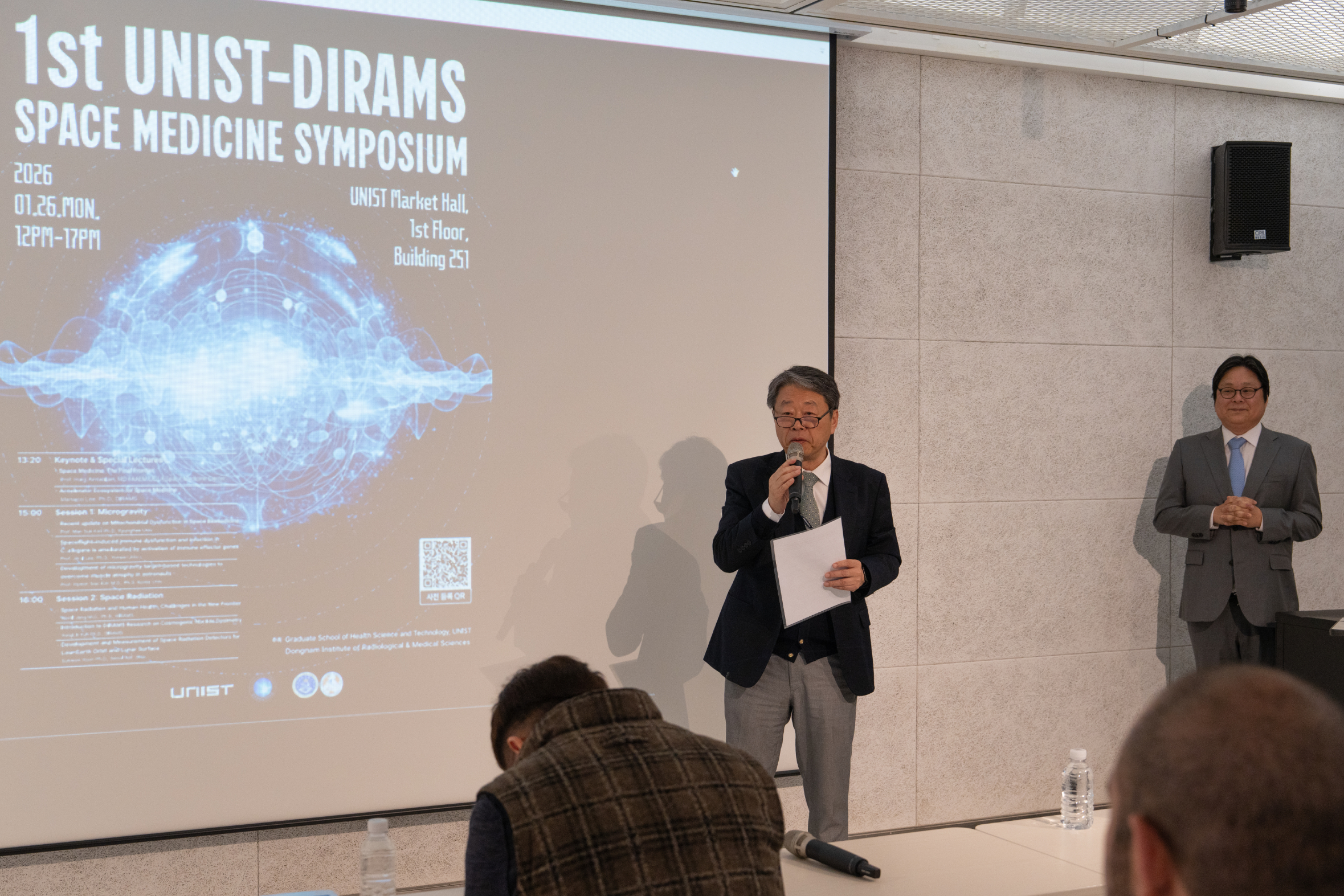
DIRAMS President Rhee Chang-hun delivered a welcome remark at the symposium.
Seungjae Baek, Head of UNIST Graduate School of HST, said that research in space medicine is essential for safe and sustainable space exploration. “Astronauts operate in extreme environments,” he noted. “Scientific preparation is critical if they are to carry out missions safely and effectively.”
President Rhee of DIRAMS emphasized the interdisciplinary nature of the field. “Space medicine requires close cooperation across medicine, engineering, and radiation science,” he said. “By combining our strengths with UNIST, we aim to build a distinctive research platform focused on protecting astronaut health.”
Through the symposium, UNIST and DIRAMS agreed to expand joint research efforts and continue building a long-term partnership in space medicine and radiation science.