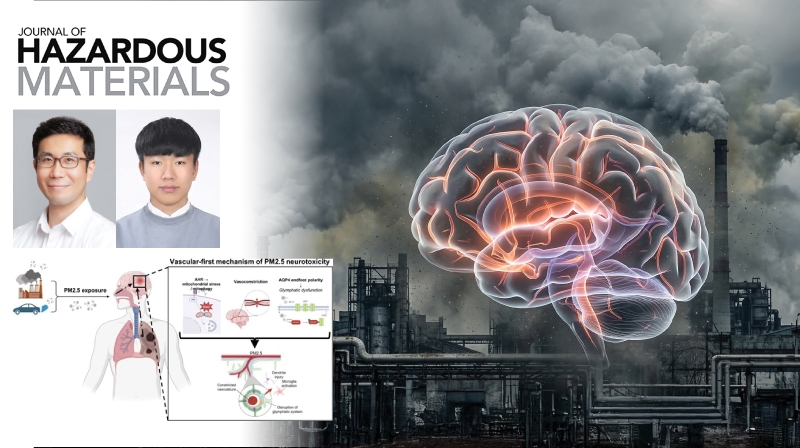
Researchers from UNIST, in collaboration with the Korea Brain Research Institute (KBRI) and the Korea Institute of Toxicology (KIT), have identified the neurotoxic mechanism by which PM2.5—fine airborne particulate matter—damages cerebrovascular health and adversely impacts brain function. This breakthrough was a collaborative effort led by Professor Kyemyung Park from the Graduate School of Health and Science (HST) at UNIST, with significant contributions from Dr. Do-Geun Kim of the Dementia Research Group at KBRI and Dr. Kyuhong Lee of KIT.
Although PM2.5 has long been associated with respiratory and cardiovascular issues, its direct effects on the brain and the underlying pathways have remained largely unclear. To address this, the research focused on endothelial cells lining brain blood vessels, which are essential for maintaining a healthy neural environment.
The study revealed that PM2.5 activates the aryl hydrocarbon receptor (AHR) within cerebrovascular endothelial cells, leading to mitochondrial dysfunction—the cell’s energy-producing organelles. This mitochondrial impairment reduces cellular energy production, impairing blood vessel regulation and ultimately decreasing blood flow to the brain.
Furthermore, disruptions were observed in the communication between blood vessels and neighboring cells such as astrocytes. These alterations can interfere with the glymphatic system, the brain’s waste clearance pathway, potentially compromising overall brain homeostasis.
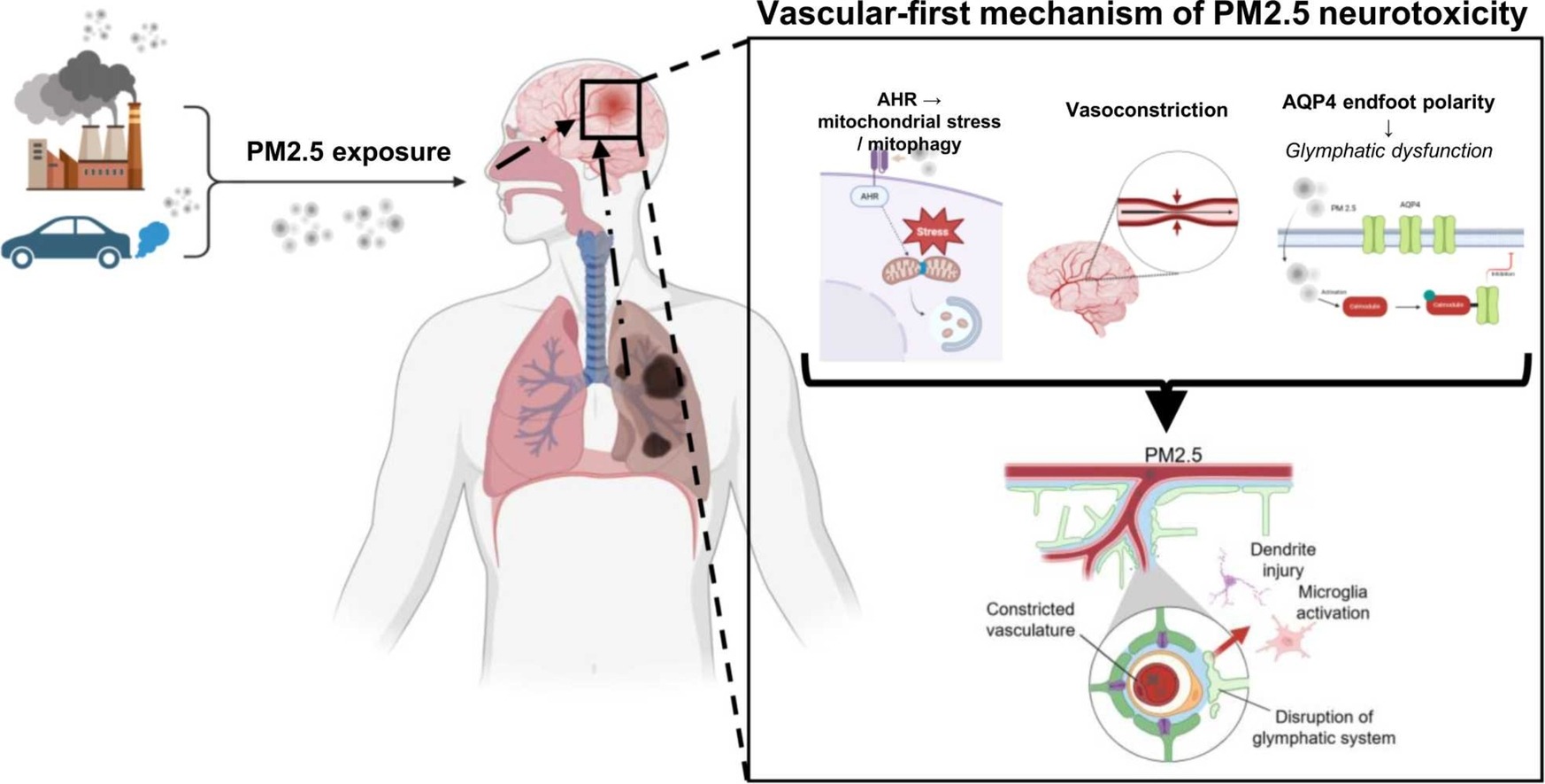 Figure 1. Schematic image, illustrating the vascular-first mechanism of PM2.5 neurotoxicity.
The hippocampus—a region vital for memory and learning—was particularly susceptible. Given its key role in neurodegenerative diseases like Alzheimer’s, these findings provide a scientific basis for understanding how environmental pollutants may contribute to long-term cognitive decline.
This research offers a comprehensive view of how PM2.5 exposure can trigger a cascade of effects, starting with cerebrovascular impairment and extending to broader changes in the brain environment.
Professor Kyemyung Park of UNIST remarked, “We identified how PM2.5 impairs energy metabolism in vascular cells, leading to systemic changes in brain function. This provides a foundational link between environmental pollution and neurodegenerative processes.”
Dr. Do-Geun Kim from KBRI, co-corresponding author, stated, “This study demonstrates that PM2.5 can influence brain health by disrupting cerebrovascular function, revealing a potential pathway through which environmental pollutants impact cognition.”
Dr. Kyuhong Lee from KIT, another co-corresponding author, added, “By accurately simulating the toxicological properties of Korean ambient PM, our findings closely reflect real-world exposure risks, offering valuable insights for environmental health policies and future research.”
The findings of this research have been published online in the Journal of Hazardous Materials on January 27, 2026. This study has been supported by the National Research Foundation of Korea (NRF), the Ministry of Science and ICT (MSIT), the Korea Brain Research Institute (KBRI), the Korea Institute of Toxicology (KIT), and initiatives, including the Bio-Medical Technology Development Program and Early-Career Research Project.
Journal Reference
Kyu-Sung Kim, Dong Im Kim, Sungsu Hwang, et al., “PM2.5 impairs gliovascular coupling via endothelial AHR–mitochondrial signaling in mice,” J. Hazard. Mater., (2026).