A research team affiliated with UNIST has introduced a novel, high-performance, and thermally stable polymer-based non-volatile analogue switch. This next-generation device is as thin and flexible as vinyl, yet capable of withstanding high temperatures. Such technology could enable reliable 5G and 6G wireless communication in demanding environments—such as wearable devices and the Internet of Things (IoT)—that are subject to constant bending, impacts, or heat exposure.
Professor Myungsoo Kim and his team from the Department of Electrical Engineering at UNIST, in collaboration with Professor Minju Kim from Dankook University, announced the successful development of this robust, flexible radio-frequency (RF) switch.
RF switches are key components in communication systems, helping to prevent signal interference and efficiently manage power. However, existing commercial RF switches are generally rigid and rely on inorganic materials, which can crack or break when bent. This has limited the development of fully flexible, rollable, or foldable communication devices.
The new RF switch is fabricated from a specially designed polymer that combines flexibility with high heat resistance, matching the performance of inorganic RF components. While traditional organic RF devices are flexible, they often struggle with high temperatures and underperform at the high frequencies used for 5G and future 6G networks.
Remarkably, this device remains stable even at temperatures exceeding 128.7°C, with an estimated data retention time of over ten years. It can transmit and block signals up to 5.38 terahertz (THz)—the widest range among polymer-based switches and the highest performance recorded for organic materials. Additionally, it withstood over 3,600 bending cycles without any loss of performance, demonstrating excellent durability and flexibility.
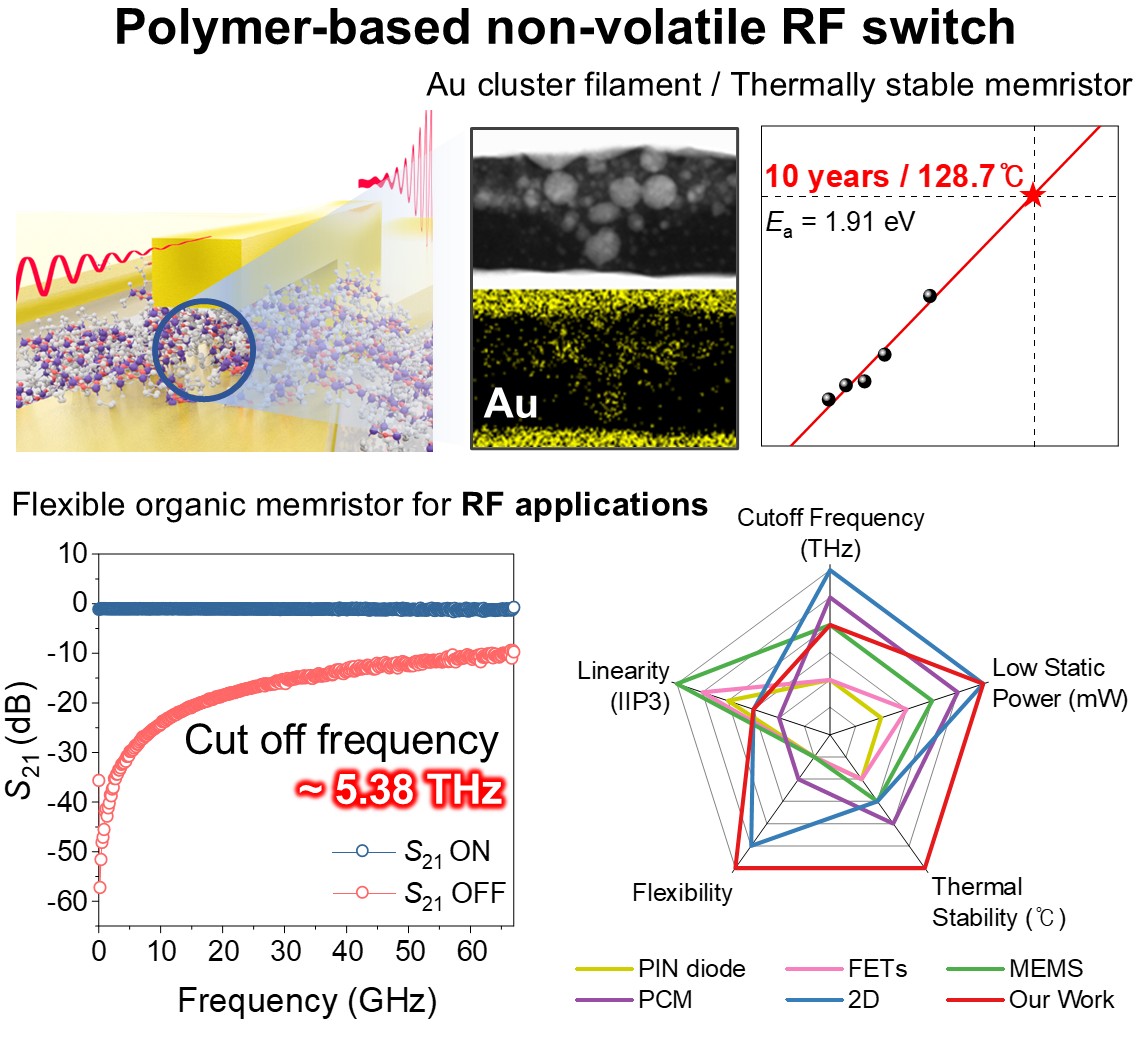
Figure 1. Schematic image, illustrating the polymer-based non-volatile RF switch.
The key to this innovation is a special polymer called pV3D3, which features a three-dimensional network structure that offers outstanding heat resistance. The switch is constructed by layering this material between ultra-thin gold films. When voltage is applied, ions migrate within the gold layer to create a conductive pathway; reversing the voltage breaks this pathway, switching the device on or off—similar to a memristor, but without moving mechanical parts.
Professor Kim remarked, “This work challenges the common belief that flexible devices are inherently heat-sensitive and low-performing.” He added, “Our technology has the potential to be widely adopted in next-generation wearable communication devices, IoT sensors, and autonomous vehicles that need to operate reliably under high temperatures and frequent bending.”
This research was participated by Sungmoon Park and Changwoo Pyo from UNIST, along with Ji Ho Yu from Dankook University. The team emphasized that overcoming both heat stability and high-frequency performance challenges represents a significant advancement in flexible electronics.
The findings have been published in Advanced Functional Materials (IF: 19.0) on December 12, 2025. This study was supported by the Basic Science Research Program for Young Investigators, funded by the National Research Foundation of Korea (NRF), and the Institute for Information & Communications Technology Planning & Evaluation (IITP).
Journal Reference
Sungmoon Park, Changwoo Pyo, Ji Ho Yu, et al., “Thermally Robust Polymer-Based Analogue Switch for Flexible mmWave Application,” Adv. Funct. Mater., (2025).