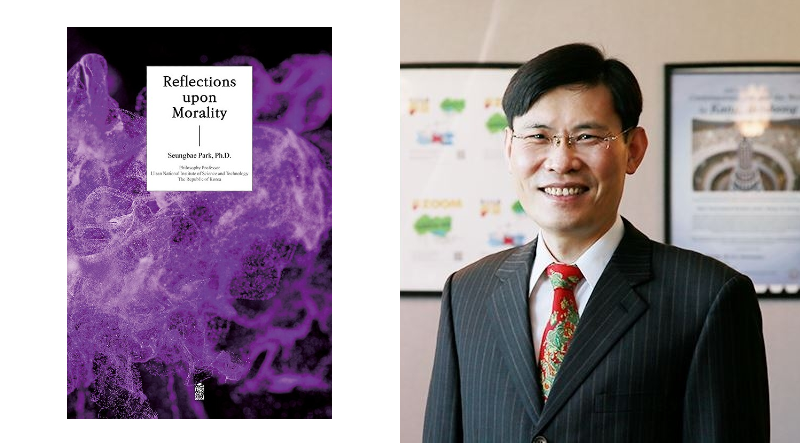
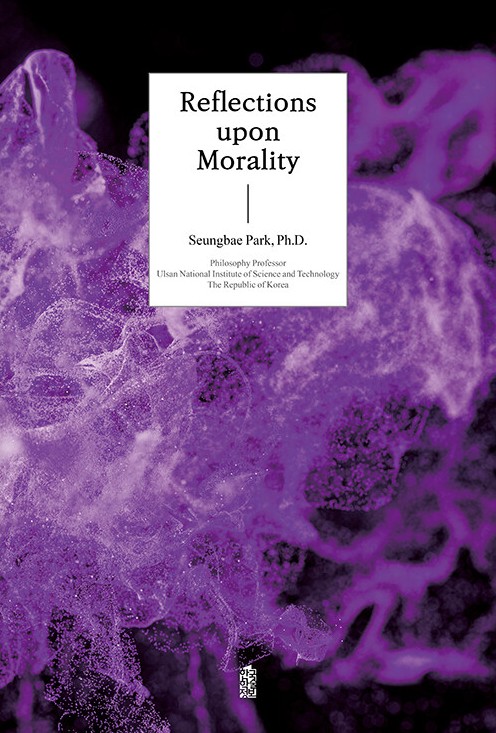
Professor Seungbae Park of the School of Liberal Arts at UNIST has published a new introductory ethics textbook, titled 《Reflections upon Morality》, which aimed at undergraduate students in science, engineering, and business.
Published by Korean Studies Information Co., Ltd., the book responds to the growing need for ethical literacy in technology-driven fields. Written entirely in English, it reflects UNIST’s English-language curriculum and seeks to provide technical students with a stronger foundation in moral reasoning.
Unlike conventional ethics textbooks, 《Reflections upon Morality》 combines established philosophical frameworks with new theoretical approaches. In addition to examining major traditions such as utilitarianism and Kantian ethics, Professor Park introduces two original normative theories—probabilistic utilitarianism and unanimitism. The book also explores the relationship between ethics and scientific disciplines such as psychology and biology, highlighting the interdisciplinary nature of moral inquiry.
The text addresses ethical dilemmas that scientists and engineers increasingly encounter in practice. Topics include the moral justification of gene-editing technologies, the design of ethical decision-making systems for autonomous vehicles, professional responsibility in the face of unjust directives, the societal impact of artificial intelligence, and the ethics of developing lethal autonomous weapons.
Beyond technology, the book expands into media, business, and international ethics. It considers whether biased reporting can be justified under press freedom, what responsibilities individuals hold as media consumers, how corporate leadership and compensation can be ethically assessed, and how nations should evaluate power, conflict, and war in the international arena.
Professor Park noted, “I hope this book provides students in technical fields with a meaningful opportunity to deepen their understanding of ethical issues.”
By integrating philosophical analysis with contemporary case studies, 《Reflections upon Morality》 aims to equip future scientists, engineers, and business leaders with the critical tools needed to make responsible decisions in an increasingly complex world.



![[2026 UNIST Matriculation] “Design Questions the World Has Never Seen!”](https://news.unist.ac.kr/wp-content/uploads/2026/02/사진-박종래-UNIST-총장이-2026년-입학식사를-전하고-있다-1-1-190x122.jpg)