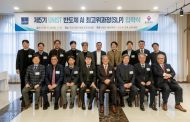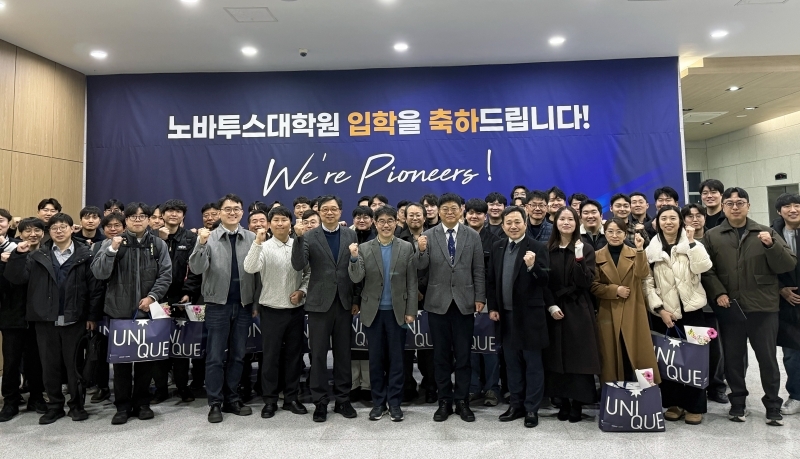
The UNIST Novatus Graduate School has begun the new academic semester with 59 students in its second cohort.
On February 26, the school held an orientation and opening ceremony introducing its demand-based curriculum framework, team project–centered education model, and industry-linked academic programs.
At the core of the Novatus Graduate School is a customized curriculum designed based on incoming students’ needs assessments. The program integrates both student competency levels and real-world industry demands, adjusting course difficulty, the balance between theory and practice, and evaluation methods to create a practical, application-oriented educational system.
To design the curriculum, the school conducted a detailed survey of incoming students, examining factors such as fields of interest, AI competency, academic background, preferred learning formats, and skills they aim to strengthen. Rather than merely collecting preferences, the survey analyzed both students’ learning levels and industry needs simultaneously. The results were used to structure courses, determine project themes, and organize the overall curriculum.
The program also reflects the diverse professional backgrounds of students. For those who require stronger foundational skills, courses emphasize theory and hands-on practice. Meanwhile, working professionals with extensive field experience engage in advanced projects focused on problem definition and commercialization strategies.
A key feature of the program is its team project-centered learning approach, which focuses on solving real industrial challenges. Students work through the full innovation process—from identifying problems and designing technologies to developing demonstration strategies and assessing commercialization feasibility—creating a continuous link between education, research, and practical application.
Early results from this model are already emerging. One student team project was recently selected for a government-supported AI solution development initiative valued at approximately KRW 1 billion, demonstrating the practical impact of the program’s industry-oriented approach.
“Designing courses based on students’ learning goals and real-world industry demand is the key,” said President Chong Rae Park of UNIST. “We are building a graduate education model that considers practical applicability from the education stage and connects it directly to tangible outcomes.”
Moving forward, the UNIST Novatus Graduate School plans to further accelerate the development of interdisciplinary professionals equipped with AI-driven problem-solving capabilities and real-world implementation skills, supported by its flexible, student-centered educational framework.