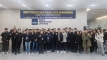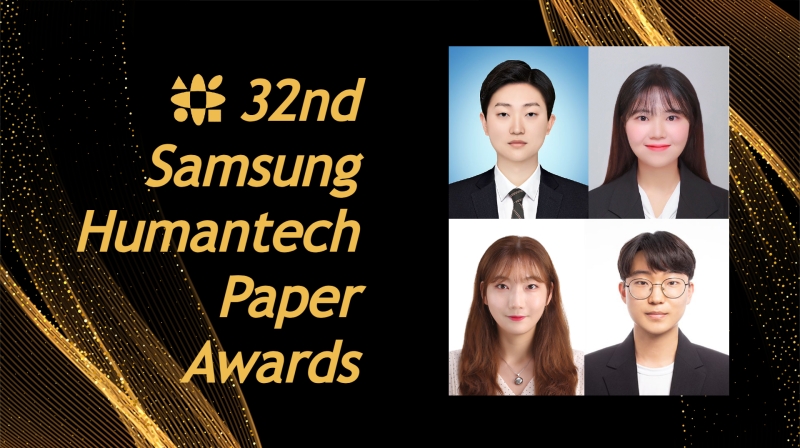
Four UNIST graduate students have earned top distinctions at the 32nd Samsung HumanTech Paper Awards, securing one Gold, one Silver, and two Bronze Prizes. The achievement highlights the university’s continued strength in next-generation research spanning energy storage, sustainable materials, and AI.
Since 2015, UNIST has produced award recipients at the competition every year, demonstrating consistent excellence across both fundamental science and applied innovation.
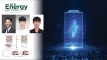
The Gold Prize was awarded to JinKi Hong of the School of Energy and Chemical Engineering (Advisor: Professor Hyun-Kon Song). His research challenges conventional electrolyte design in next-generation batteries by showing that commonly used diluents can inhibit critical interfacial reactions. By precisely controlling molecular structures, Hong introduced an interfacial purification mechanism that prevents diluents from interfering at the electrode surface. The approach improves both energy density and long-term stability—two essential benchmarks for advanced battery systems.
“I am grateful to my advisor and colleagues who supported this research,” Hong said. “I hope to continue refining the technology and contribute to its practical application.”
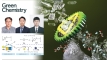
The Silver Prize went to MiRa Shin of the Department of Materials Science and Engineering (Advisor: Professor Chaenyung Cha). Shin developed a one-step upcycling method that converts mixed polyester waste into high-value biodegradable thermoplastic polyester elastomers (TPEE), eliminating the need for complex separation or purification processes. The technology offers a practical pathway for recycling diverse plastic waste streams more efficiently and sustainably.
“This recognition affirms the effort behind the research,” Shin said. “It strengthens my commitment to advancing sustainable materials development.”
Bronze Prizes were awarded to YooJin Chang of the School of Energy and Chemical Engineering (Advisor: Professor Hyunhyub Ko) and SeungOh Han of the Graduate School of Artificial Intelligence (Advisor: Professor Kyungdon Joo).
YooJin Chang developed a biodegradable artificial synapse capable of operating at just 0.85 femtojoules—billions of times lower than conventional electronic devices—while maintaining long-term memory retention for up to 5,944 seconds. By engineering a dual-layer structure using biodegradable polymers, the study improved device durability and stability, expanding possibilities for environmentally sustainable neuromorphic systems.
SeungOh Han introduced a new method for precise three-dimensional indoor reconstruction using panoramic images alone. By reducing reliance on extensive high-quality datasets, the approach offers a more efficient pathway for 3D spatial modeling applications.
UNIST President Chong Rae Park congratulated the awardees, noting that their accomplishments reflect the depth of talent cultivated at the university, noting “These awards demonstrate the research capabilities and potential of our graduate students. UNIST will continue to strengthen its research environment and provide robust support to nurture future scientific leaders.”
Meanwhile, the Samsung Human Tech Paper Awards is South Korea’s most competitive student research competitions, widely recognized as a benchmark of academic achievement.



![[2026 UNIST Matriculation] “Design Questions the World Has Never Seen!”](https://news.unist.ac.kr/wp-content/uploads/2026/02/사진-박종래-UNIST-총장이-2026년-입학식사를-전하고-있다-1-1-190x122.jpg)