A research team, affiliated with UNIST presented a fully biodegradable, robust, and energy-efficient artificial synapse that holds great promise for sustainable neuromorphic technologies. Made entirely from eco-friendly materials sourced from nature—such as shells, beans, and plant fibers—this innovation could help address the growing problems of electronic waste and high energy use.
Traditional artificial synapses often struggle with high power consumption and limited lifespan. Led by Professor Hyunhyub Ko from the School of Energy and Chemical Engineering, the team aimed to address these issues by designing a device that mimics the brain’s synapses while being environmentally friendly. The result is a layered structure made from natural, biodegradable polymers that can remember information for a long time and operate with very low energy.
The device is built like a tiny sandwich, with ion-active layers separated by an ion-binding layer made from cellulose acetate—derived from plant stems—and other layers sourced from shells and beans. When electricity is applied, sodium ions—similar to natural neurotransmitters—are released inside the device. These ions bind at the interfaces, a process called ion dipole coupling, which allows the synapse to hold onto some ions even after stimulation stops. This retention enables the device to produce cascade-like responses, supporting various forms of synaptic plasticity, including short-term and long-term memory.
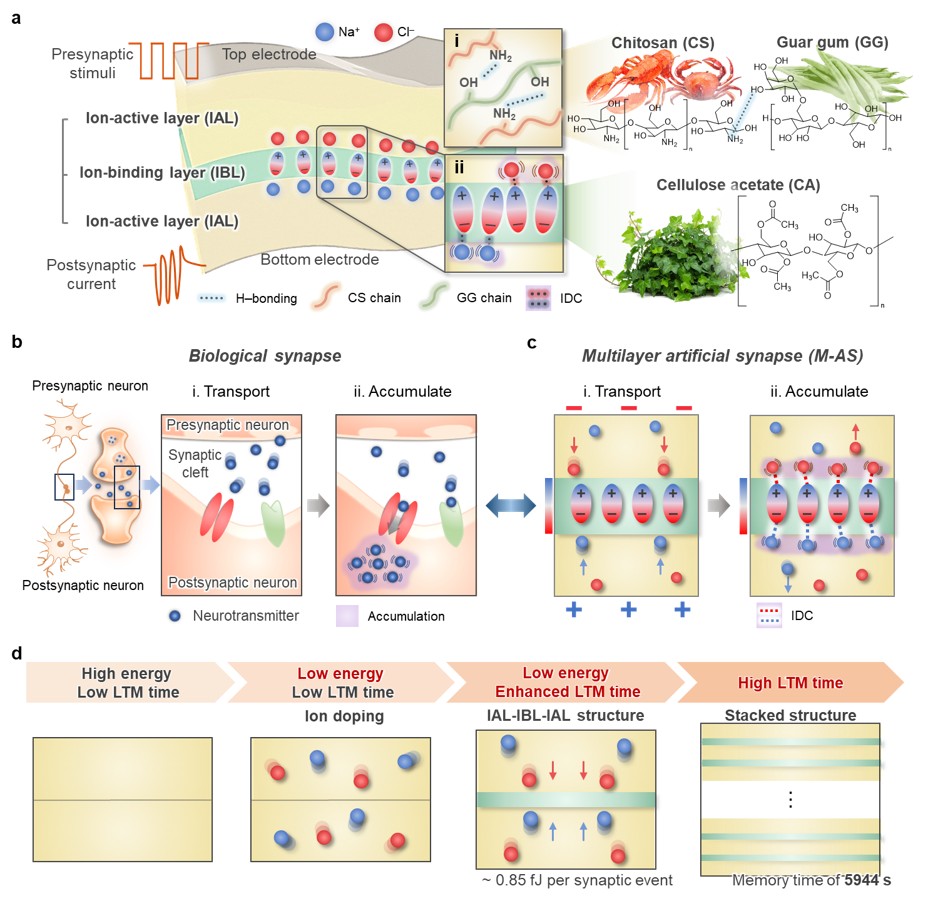 Figure 1. Concept of the biodegradable multilayer artificial synapse.
Most notably, this artificial synapse can hold its memory for nearly 6,000 seconds—about 100 minutes—making it the longest-lasting biodegradable synapse reported so far. It also uses an extremely small amount of energy—just 0.85 femtojoules per signal—much less than what natural brain synapses typically need, which ranges from 2.4 to 24 femtojoules per event.
Beyond its performance, the device is fully biodegradable. Both the ion-active and ion-binding layers break down naturally within 16 days in soil, helping to reduce the growing problem of electronic waste. The materials used, like cellulose acetate and chitosan from shells, are safe for the environment and can decompose without leaving harmful residues.
The team also demonstrated a practical application that is a simple robotic system that mimics reflexes. When the device detects heat, the ion movement inside it amplifies the signal, triggering the robot’s hand to withdraw from a hot object—just like a reflex in humans. This showcases the potential for eco-friendly robots that can learn and respond to stimuli while eventually disappearing without harming the environment.
Professor Ko emphasized, “Our work tackles some of the biggest hurdles in artificial synapse technology—ultralow power use, stability, durability, and biodegradability—all at once.” He added, “It is a significant step toward developing eco-friendly neuromorphic devices that can safely interact with our environment and then seamlessly disappear.”
This research was led by first authors Dr. Sangyun Na and Dr. Yun Goo Ro, along with team members Cheolhong Park, Seokhee Jung, Yong-Jin Park, Min Sub Kwak, Jeyoon Kim, Hyeji Oh, and Jaejun Kim at UNIST. Their findings have been published in Nature Communications on November 27, 2025. The study was supported by the National Research Foundation (NRF) of Korea.
Journal Reference
Yoojin Chang, Sangyun Na, Yun Goo Ro, et al., “Robust biodegradable synapse with sub-biological energy and extended memory for intelligent reflexive system,” Nature Comm., (2025).