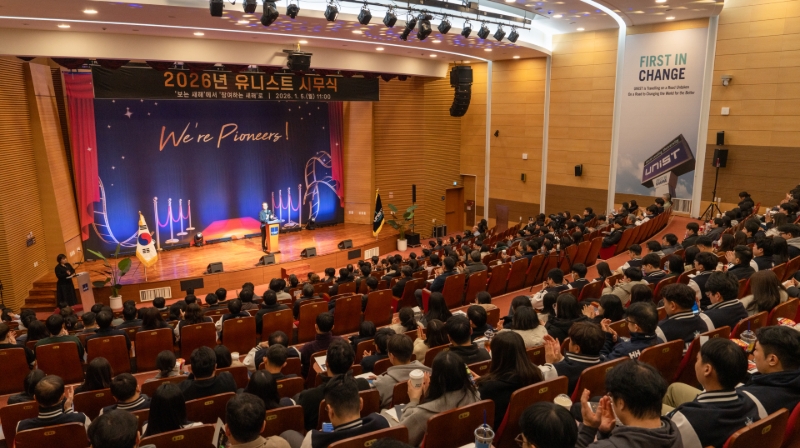
UNIST marked the start of 2026 with its New Year’s Kick-off Meeting on January 5, bringing together faculty, staff, and students to reflect on the university’s progress and to set a clear direction for the year ahead.
In his New Year’s address, President Chong Rae Park announced that UNIST will adopt ‘Creative Destruction,’ as its guiding principle for 2026, marking a decisive shift toward bold institutional innovation. Reflecting on the tenth anniversary of UNIST’s transition into a government-funded institute of science and technology, President Park reaffirmed the university’s long-term ambition under UNIST VISION 2050 to become the ‘UNIque & beST Science and Technology NEXUS.’
He noted that UNIST, as a science-and technology-driven institution, has consistently worked to educate leaders who will shape the future of science and innovation, to pursue frontier research at the highest level, and to translate discovery into real-world impact through deep collaboration with industry. In 2026, he said, these efforts will be expanded across education, research, industry collaboration, and administration, moving accumulated achievements toward tangible change in practice.
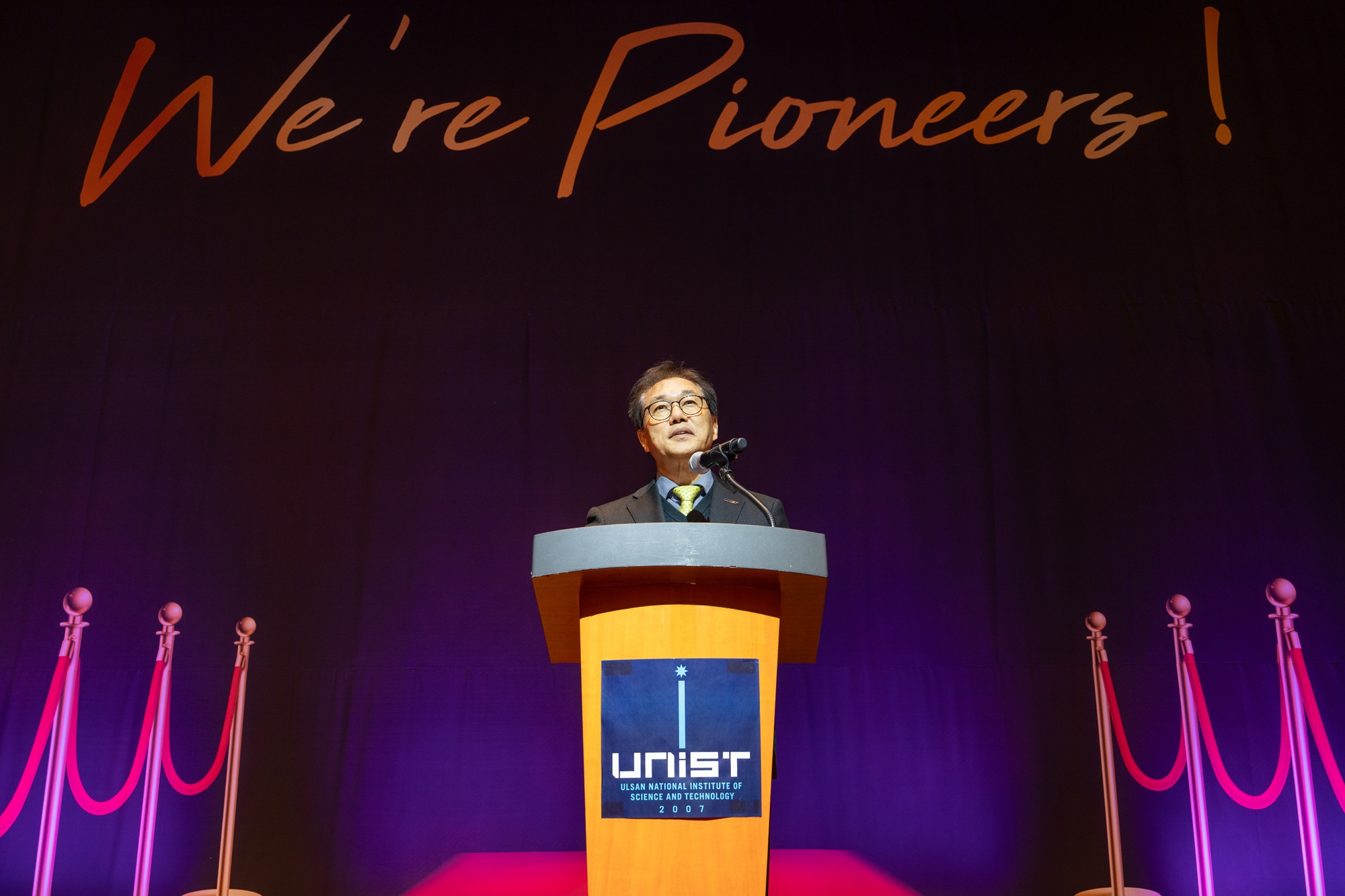
UNIST President Chong Rae Park extends his new year’s greetings to all members of the UNIST community at the 2026 New Year’s Kick-off Ceremony on January 5, 2026.
In education, UNIST will restructure its academic system to respond to the era of large-scale AI transformation. Courses and academic frameworks will shift toward a competency-based model. Emphasizing that “[T]he most important ability is not arriving at the right answer, but the capacity to define meaningful problems,” President Park stated that all students will be required to develop foundational AI literacy, including an understanding of technical principles, as well as ethical and societal implications.
In research and industry collaboration, UNIST will accelerate connections with industry through its ‘Tech Bridge’ strategy, aimed at shortening the gap between research and real-world application. President Park highlighted the urgency of AI-driven transformation (AX) in manufacturing across the industrial belt linking Ulsan, Gyeongju, Pohang, Gyeongnam, and Busan—the pentagon economic zone. He emphasized expanding field-ready AI solutions and practice-oriented collaboration to strengthen industrial competitiveness.
To support this effort, UNIST will reinforce demand-driven joint projects with industry, expand open labs and field demonstration programs, and promote a cycle in which research is validated on-site and feeds back into further research. University-led technology transfer and startup activities will also be expanded to ensure that research outcomes translate into business and industrial impact.
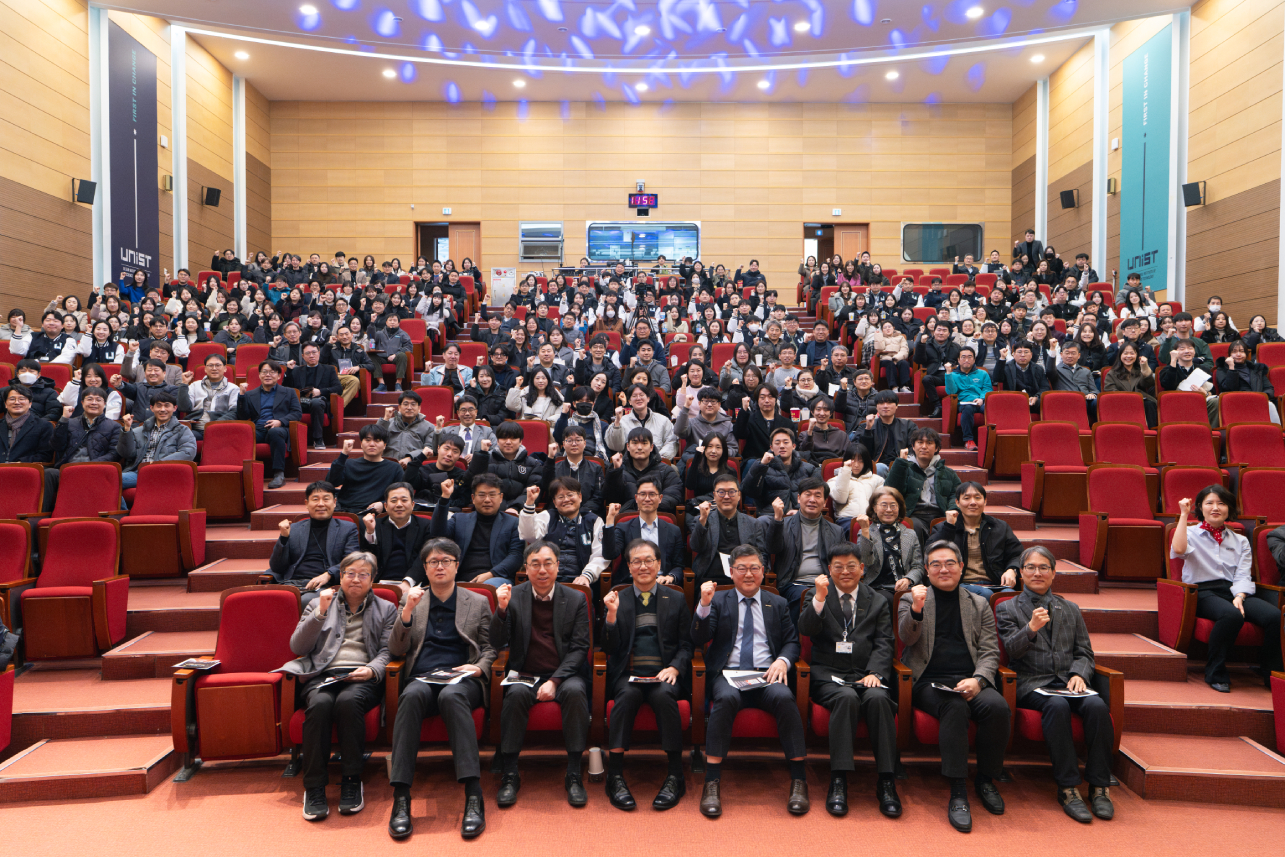
Faculty, staff, and students pose for a group photo at the 2026 New Year’s Kick-off Meeting, expressing a shared commitment to the year ahead.
Organizational operations and administration will also undergo reform, with a focus on changing the way work is done. President Park said barriers between departments will be lowered to make collaboration a routine practice, while job analysis and organizational diagnostics will be used to address imbalances in workload.
The use of AI will be expanded across the campus. UNIST plans to institutionalize the use of AI agents in research, learning, and administration through UNIAI, the university’s internally developed generative AI platform—the first of its kind among Korean universities.
“Building on the research capacity and execution strength UNIST has accumulated, we will contribute to regional industrial innovation and enhance national competitiveness in science and technology,” President Park said.
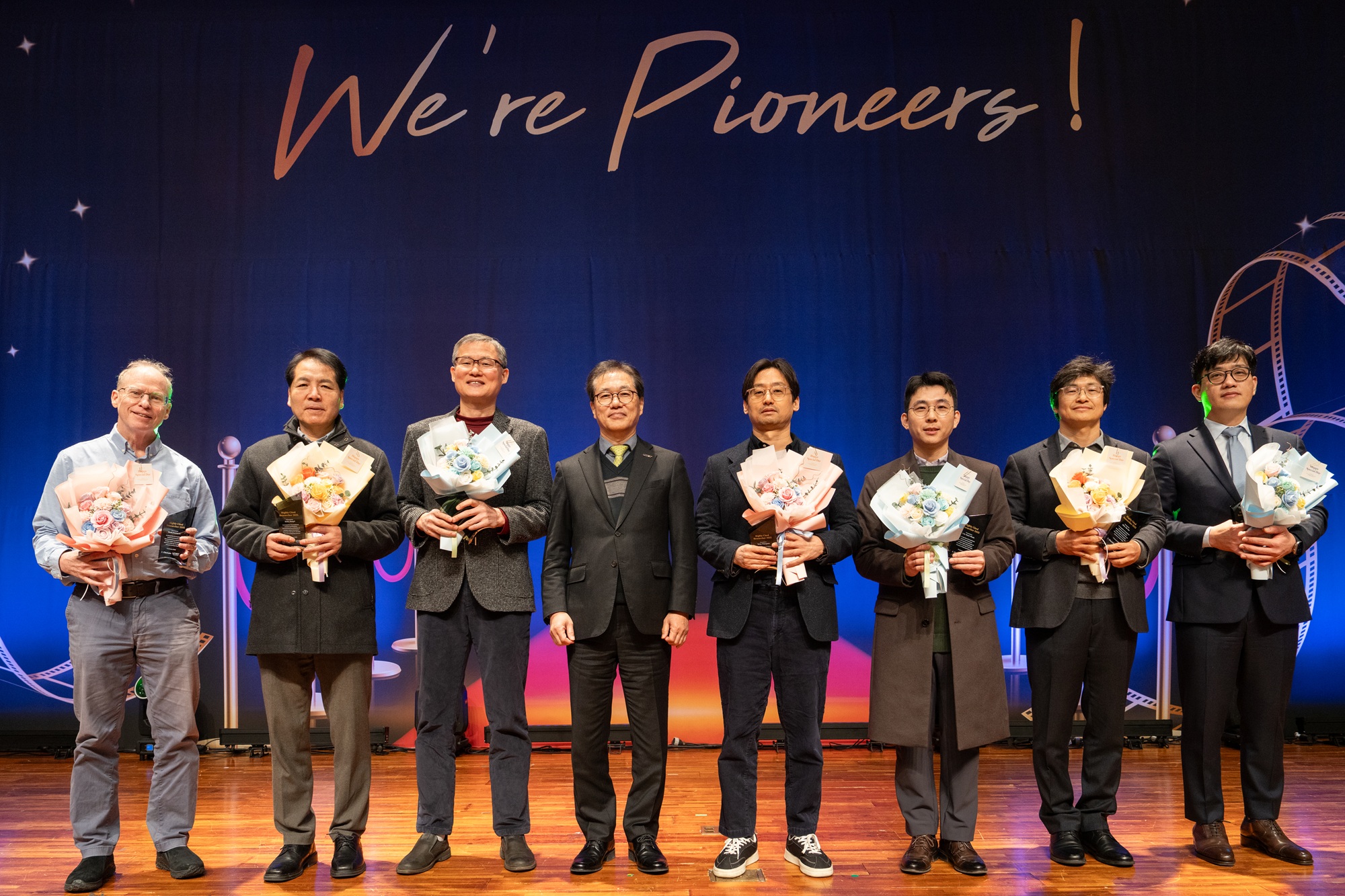
Above are the UNIST faculty members named to the 2025 list of Highly Cited Researchers (HCR).
Meanwhile, the New Year’s Kick-off Meeting also included an awards ceremony recognizing nine UNIST faculty members named to the 2025 list of Highly Cited Researchers (HCR). UNIST has ranked first in Korea for nine consecutive years in the Leiden Ranking, which evaluates research quality, reaffirming its global research competitiveness.
Click HERE to read the New Year’s Message from President Chong Rae Park.


![[2026 UNIST Commencement] UNIST Confers Degrees to 883 Graduates](https://news.unist.ac.kr/wp-content/uploads/2026/02/사진-2026학년도-UNIST-졸업생들이-학사모를-위로-던지며-졸업을-축하하고-있다-1-800x413-190x122.jpg)