Inspired by the infrared sensory organs of snakes, which allow them to detect prey in complete darkness, researchers at UNIST have harnessed artificial intelligence (AI) to develop a groundbreaking sensor material that significantly enhances thermal detection capabilities. This advancement promises to elevate the performance of next-generation infrared cameras, night-vision systems for vehicles, and various applications requiring sensitive thermal sensing.
Led by Professors Changhee Sohn and Hyeong-Ryeol Park from the Department of Physics at UNIST, the research team developed a multilayer thin-film structure for microbolometers—infrared sensors that convert thermal radiation into electrical signals. Utilizing AI-driven optimization techniques, they identified a multilayer configuration that outperforms existing commercial materials by more than 20 times in sensitivity and stability.
Microbolometers operate based on changes in electrical resistance triggered by temperature variations caused by incident infrared radiation. To achieve high sensitivity, the materials employed must respond to small temperature shifts with pronounced resistance changes, ensuring accurate detection.
The team focused on vanadium dioxide (VO₂), renowned for its high sensitivity to temperature changes. They designed a four-layer structure composed of tungsten-doped VO₂, with each layer’s thickness and tungsten concentration precisely tailored. This multilayer configuration effectively mitigates issues such as signal fluctuations and hysteresis—phenomena where the sensor’s response depends on whether the temperature is rising or falling.
Given the vast number of possible multilayer arrangements—exceeding 1.3 million—the researchers employed a genetic algorithm, a form of AI inspired by natural selection, to efficiently identify the optimal structure. This process iteratively combines and refines candidate configurations to discover the most effective design.
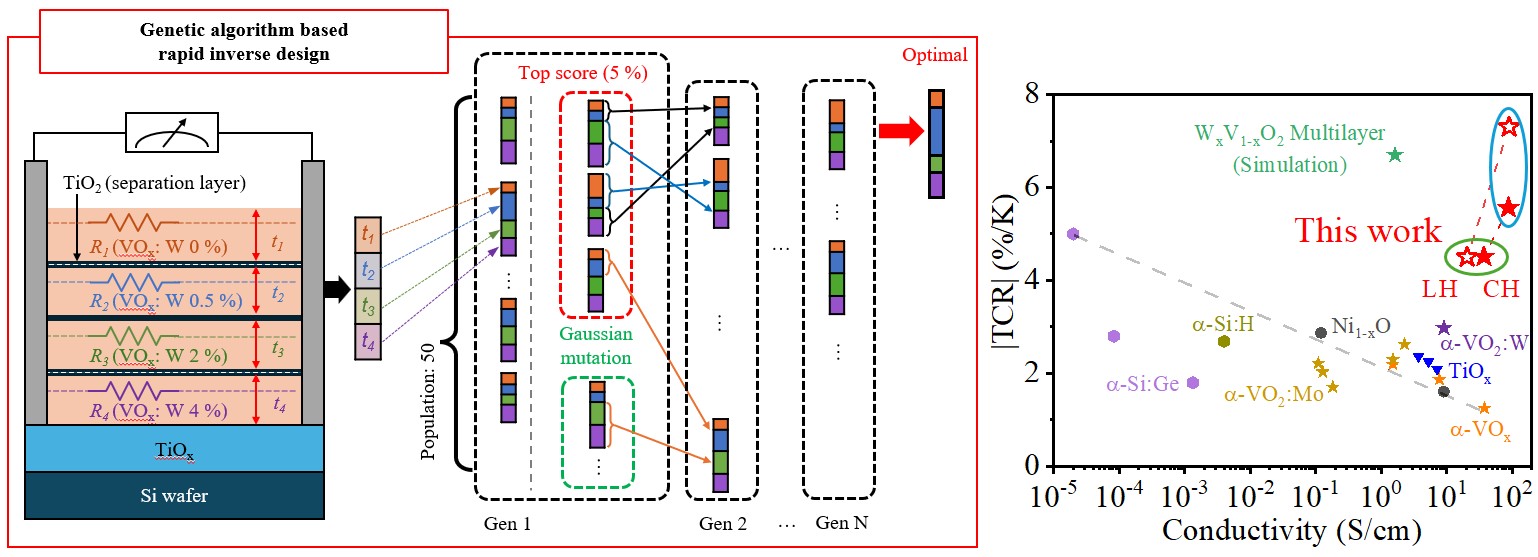
Figure 1. Schematic illustration of the study design.
Experimental results showed that, within the temperature range of 20°C to 45°C, the new multilayer material exhibited a temperature coefficient of resistance (TCR) more than three times higher than conventional materials, reaching 7.3%. Additionally, the overall sensitivity—measured by the β index, which accounts for both sensitivity and signal stability—was enhanced by a factor of 23.6, reflecting a substantial improvement in signal reliability.
Importantly, these multilayer thin films can be fabricated at low temperatures of 300°C, compatible with existing semiconductor manufacturing processes. This contrasts with traditional VO₂-based sensors, which often require processing at temperatures above 500°C, risking damage to pre-fabricated circuits.
Led by Jin-Hyun Choi and Dr. Hyoung-Taek Lee, this research demonstrates how AI can drastically shorten the development timeline for advanced functional materials—reducing what could take centuries of manual experimentation to mere months. The team emphasizes that their method allows for direct synthesis of optimized thin films, streamlining the path toward commercial application.
Professor Sohn highlights the broad implications of this breakthrough, including applications in autonomous vehicle night vision, drone-based surveillance, and large-scale thermal monitoring for early virus detection. The enhanced sensitivity and reliability of these sensors could revolutionize thermal imaging technology across various sectors.
The findings of this research have been published in Advanced Science on January 28, 2026. The study has been supported by the National Research Foundation of Korea (NRF), the Institute for Information & Communications Technology Planning & Evaluation (IITP), and other government-funded programs dedicated to nanomaterials and innovative device development.
Journal Reference
Jin-Hyun Choi, Hyoung-Taek Lee, Jeonghoon Kim, et al., “AI-Optimized Vanadium Oxide Multilayers for More Than 20-fold Enhancement in Bolometric Performance,” Adv. Sci., (2026).