Obesity is known to be a major risk factor that exacerbates metabolic disorders, such as type 2 diabetes. A key molecule involved in this process is endotrophin, a signaling protein that links excess fat accumulation to metabolic decline. Recent research from UNIST has identified a natural compound, capable of directly inhibiting endotrophin production, paving the way for innovative therapeutic interventions.
Led by Professor Jiyoung Park of the Department of Biological Sciences, the research team demonstrated that nigericin, a natural substance derived from microorganisms, effectively suppresses endotrophin synthesis in obese adipose tissue. Their findings reveal that nigericin reduces fibrosis and inflammation within fat tissue while significantly improving insulin sensitivity.
Obese adipose tissue often undergoes hypoxia, which triggers chronic inflammation and pathological extracellular matrix remodeling. This process leads to increased production of endotrophin, a fragment of collagen VIα3 (COL6A3), known to impair adipose function and worsen metabolic health.
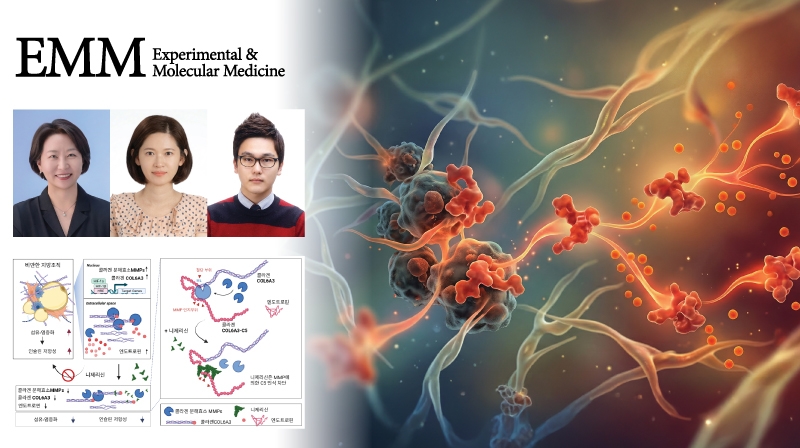
The team uncovered that nigericin binds specifically to a region of COL6A3, preventing matrix metalloproteinases (MMPs)—enzymes responsible for collagen cleavage—from accessing their substrate. By occupying this site, nigericin blocks endotrophin formation at the molecular level.
 Figure 1. Schematic representation of the proposed mechanism by which NGC regulates ETP generation and improves insulin sensitivity in obese AT.
“This strategy is particularly noteworthy because it directly targets the initial step in endotrophin production, unlike traditional therapies that indirectly suppress inflammation or alter gene expression,” explained the research team. “It offers a new paradigm for disrupting the pathological signaling pathways underlying metabolic diseases.”
In preclinical models, administration of nigericin to high-fat diet-fed mice resulted in marked reductions in adipose tissue fibrosis and inflammation. These effects occurred without adverse effects on liver or kidney function. Notably, fasting blood glucose levels decreased by approximately 30%, and insulin sensitivity was significantly improved.
The researchers screened over 1,000 natural compounds and identified nigericin—produced by actinomycetes—as a promising candidate, owing to its ability to stably inhibit endotrophin synthesis without directly affecting proteolytic enzymes.
Professor Park concluded, “This discovery reveals a novel molecular mechanism for controlling endotrophin levels and highlights the potential for developing targeted therapies for obesity, diabetes, and other conditions characterized by fibroinflammation, including certain cancers.”
Supported by the Ministry of Science and ICT (MSIT) and the National Research Foundation of Korea (NRF), the study was published online in Experimental & Molecular Medicine, on March 5, 2026.
Journal Reference
Chu-Sook Kim, Woobeen Jo, Jungsun Yoo, et al., “Targeting COL6A3-C5 with nigericin suppresses endotrophin formation and enhances insulin sensitivity in obesity,” Exp. Mol. Med., (2026).