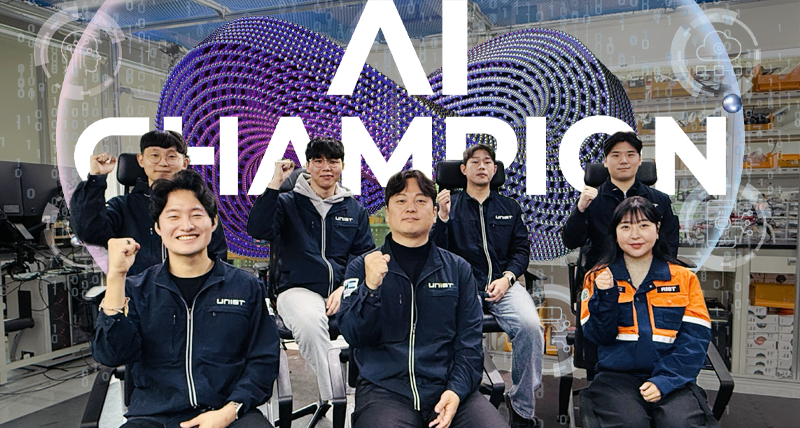
A team, led by Professor Im Doo Jung from the Department of Mechanical Engineering and Graduate School of Artificial Intelligence at UNIST has made a significant impact on the national stage with a groundbreaking AI solution to address one of the most persistent hazards in industrial workplaces—noise-induced hearing loss.
At the finals of the ‘2025 AI Champion Competition,’ hosted by the Ministry of Science and ICT (MSIT), Team SafeAngel secured an impressive third place and was honored with the Minister’s Award (AI Challenger Award). Out of 630 participating teams nationwide, only five reached the final stage, making this achievement particularly noteworthy.
The competition marked the inaugural nationwide AI technology contest, with preliminary rounds narrowing the field from 100 teams to 20, and then to just 8 finalists. Team SafeAngel distinguished itself through its practicality, technological sophistication, and potential for societal impact.
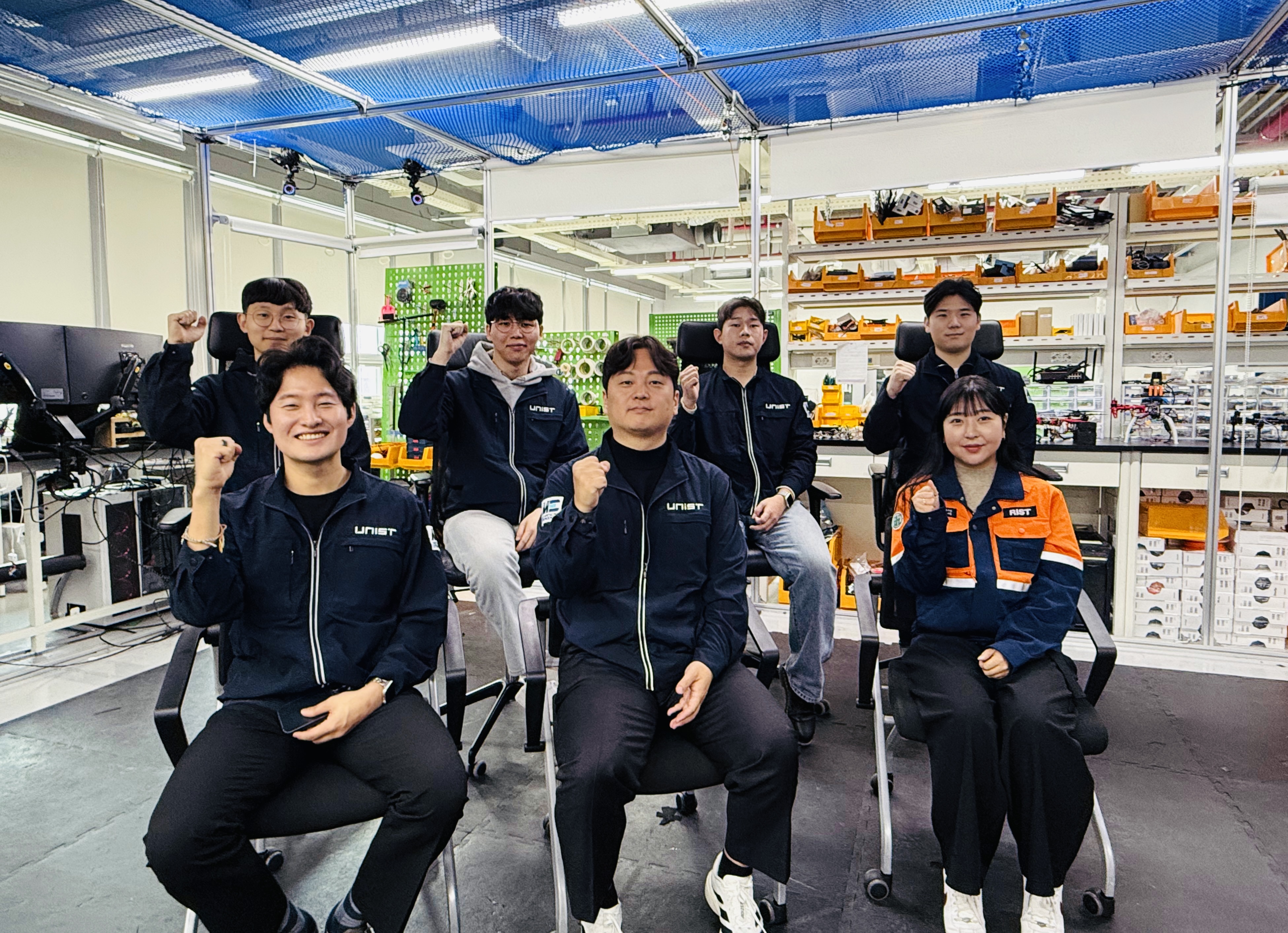
Including Professor Im Doo Jung, the team comprises TaeKyeong Kim, Kyung-Hwan Kim, Do Hyean Kim, Byung-Hoon Cong, and YunSoo Lee from the Department of Mechanical Engineering at UNIST. Collaborators from the Research Institute of Industrial Science and Technology (RIST) include Junyoung Seo, Jina Bang, and Youngmin Moon. Their project, titled ‘On-Device Physical AI Technology for Industry-Specific Active Hearing Protection and Communication Devices,’ aims to revolutionize noise management in industrial settings.
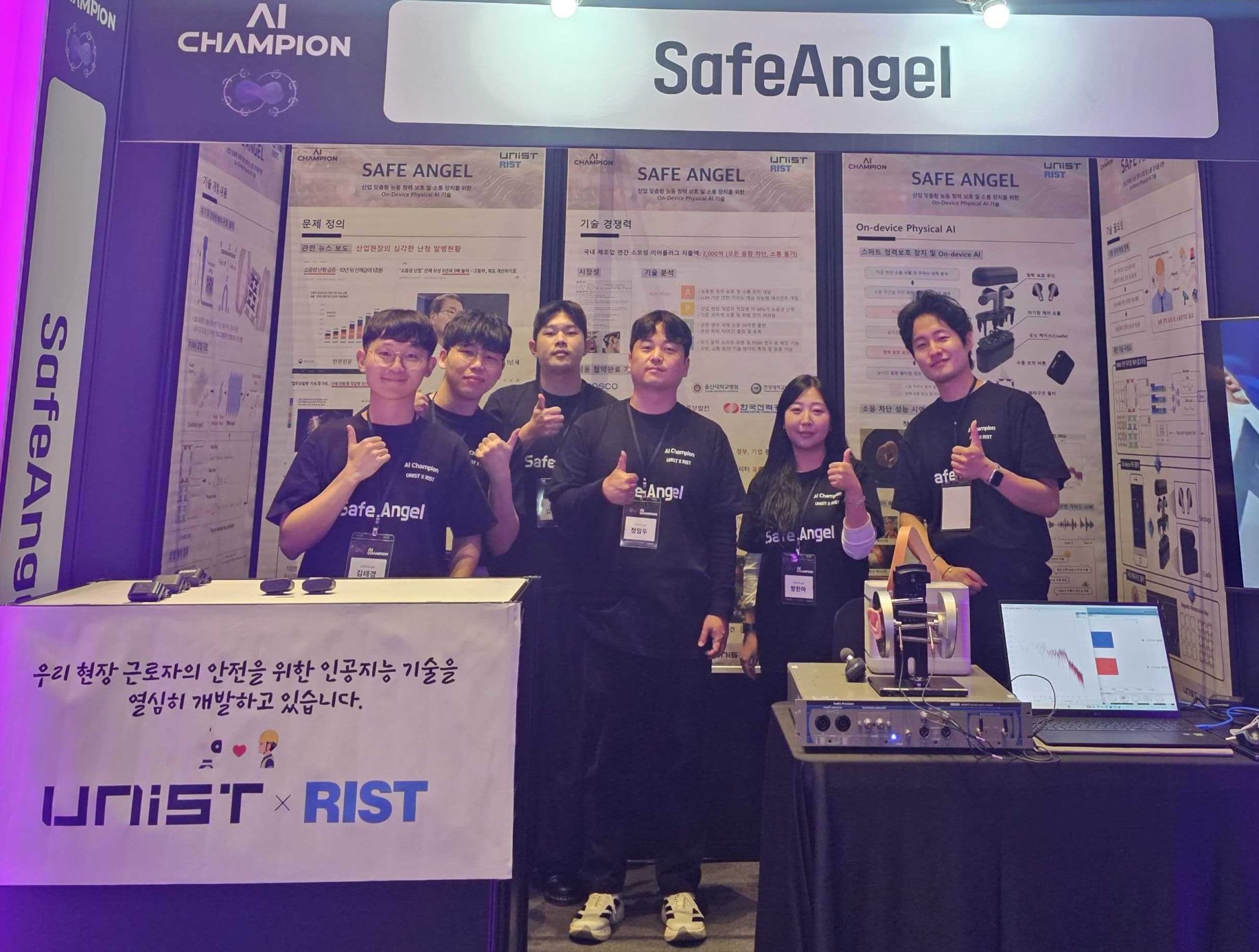
Team SafeAngel, taking a commemorative photo at the technology showcase booth at the 2025 AI Champion Competition on November 5, 2025.
Industrial environments remain hazardous due to overwhelming noise levels. According to statistics from the Ministry of Employment and Labor (MOEL), 98.8% of occupational diseases last year were related to noise-induced hearing loss. Traditional earplugs, which block out all sounds, hinder workers’ ability to hear alarms or communication from colleagues, thereby increasing the risk of accidents.
Team SafeAngel tackled this challenge head-on by developing an AI system that selectively filters sounds, allowing workers to hear only what is necessary. Using physical AI technology, the system can distinguish and eliminate disruptive noises, such as high-frequency and impact sounds that conventional noise-canceling devices fail to suppress. This approach ensures ear protection without compromising vital communication or safety signals.
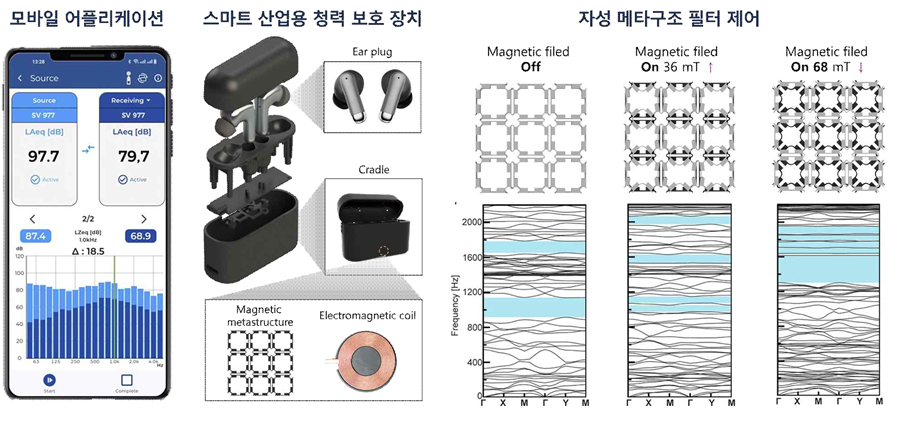
The core innovation utilizes ‘Physics Informed Neural Networks (PINN),’ which incorporate physical laws into the AI learning process. By analyzing ambient noise in real-time, the system filters out dangerous frequency bands and automatically adjusts physical filters in extremely noisy environments to block unnecessary loud sounds. Additionally, the system predicts machine failures through analysis of mechanical sounds and detects changes in workers’ voice patterns to assess fatigue and potential risks.
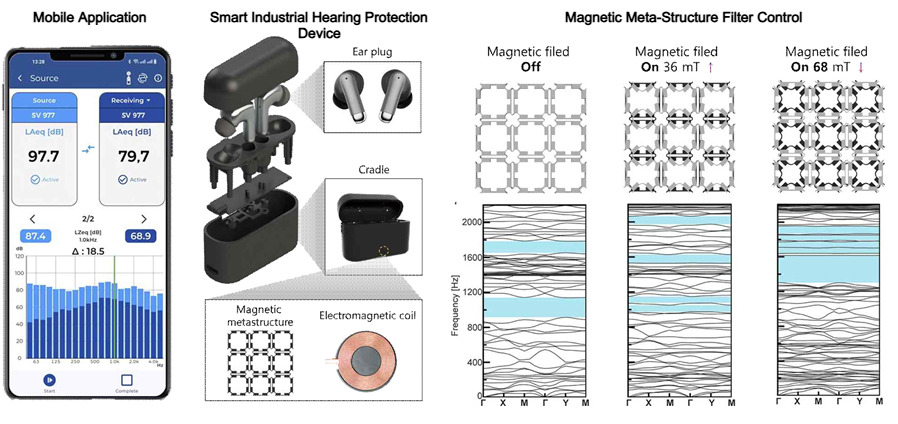
Schematic illustration of the ‘Smart Industrial Hearing Protection Device’ developed by Team SafeAngel using AI technology.
Professor Jung expressed his vision, “Our goal is to contribute to reducing chronic hearing loss and fatal accidents caused by communication breakdowns in industrial workplaces through advanced AI technology.” He further noted, “It is crucial that AI not only protects workers’ hearing but also enhances overall safety and productivity by analyzing signals of mechanical failures embedded in noise. With this project, originating from real-world industrial challenges, we hope to demonstrate the practical potential of physics-based AI.”
In addition to securing third place, Team SafeAngel received the ‘AI Impactor Award (Popularity Award)’ through a public vote involving 200 participants, reflecting broad societal interest and support. The team’s outstanding performance earned them both the AI Challenger and AI Impactor awards, along with the opportunity for up to KRW 500 million in funding to support continued research and development.


![[2026 UNIST Matriculation] “Design Questions the World Has Never Seen!”](https://news.unist.ac.kr/wp-content/uploads/2026/02/사진-박종래-UNIST-총장이-2026년-입학식사를-전하고-있다-1-1-190x122.jpg)
![[2026 UNIST Commencement] “Become Way Makers Who Open Paths Where None Are Drawn!”](https://news.unist.ac.kr/wp-content/uploads/2026/02/사진-박종래-총장이-UNIST-학위수여식사를-전하고-있다-3-1-190x122.jpg)
![[2026 UNIST Commencement] Voices of Class of 2026](https://news.unist.ac.kr/wp-content/uploads/2026/02/Untitled1-190x122.jpg)