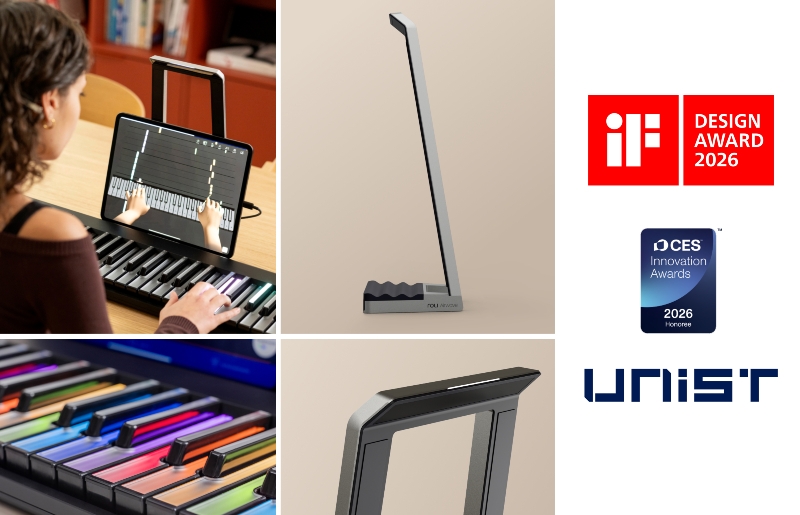
UNIST Department of Design has gained international recognition for its groundbreaking development of an AI-powered music learning platform that helps music learners improve their skills. This new technology tracks users’ hand movements in real time and delivers immediate, data-driven feedback, redefining the way people learn to play the piano.
Led by Professor HongYeul Eom, the research team collaborated with ROLI, a well-known UK-based innovator in digital music instruments and creative technology. Together, they designed two revolutionary products—ROLI Airwave and ROLI Piano. These pioneering solutions have received the 2026 CES Innovation Award and 2026 iF Design Award, while also earning a place among TIME Magazine’s Best Innovations of 2025—testament to their transformative impact on the future of music technology.
This initiative was driven by the dedicated efforts of UNIST students Dabin Lee, Jaehyeok Oh, and Minji Kim, whose expertise in design and development was instrumental in translating cutting-edge research into commercially viable products. Their work exemplifies the university’s commitment to fostering industry-academia collaboration and nurturing innovative talent.
Central to this technological advancement is ROLI Airwave, a smart music stand embedded with state-of-the-art hand-tracking sensors capable of capturing nuanced movements, hand positioning, and timing. By analyzing these gestures, ROLI Airwave offers performers intuitive visual cues and real-time performance feedback, empowering learners to master intricate aspects of piano technique—such as finger placement, timing, and expressiveness—that traditionally pose significant challenges.
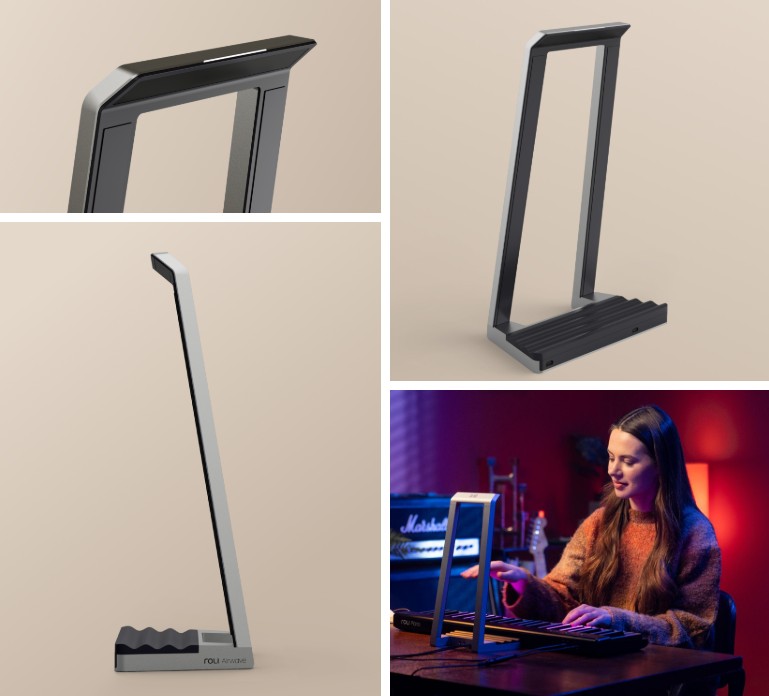
ROLI Airwave l Image Credit: UNIST Department of Design, 2026 iF Design
Complementing this is ROLI Piano, a sleek, full-size MIDI keyboard controller featuring semi-weighted, multi-dimensional expressive (MPE) keys illuminated by vibrant RGB lighting. Designed for both precision and flexibility, ROLI Piano enables musicians to develop correct fingering, pitch bends, and expressive nuances with unprecedented ease, fostering a more natural and inspiring creative process.
ROLI Piano integrates these devices into a pioneering AI-enabled learning platform. Utilizing advanced computer vision and high-fidelity stereo infrared cameras, the system captures detailed data from 27 points on each hand, facilitating sophisticated, real-time analysis of finger positioning and movement. Powered by proprietary AI technology, the platform delivers personalized coaching, corrective feedback, and tailored practice recommendations through conversational interfaces—creating a dynamic, adaptive learning environment that inspires sustained engagement and mastery.
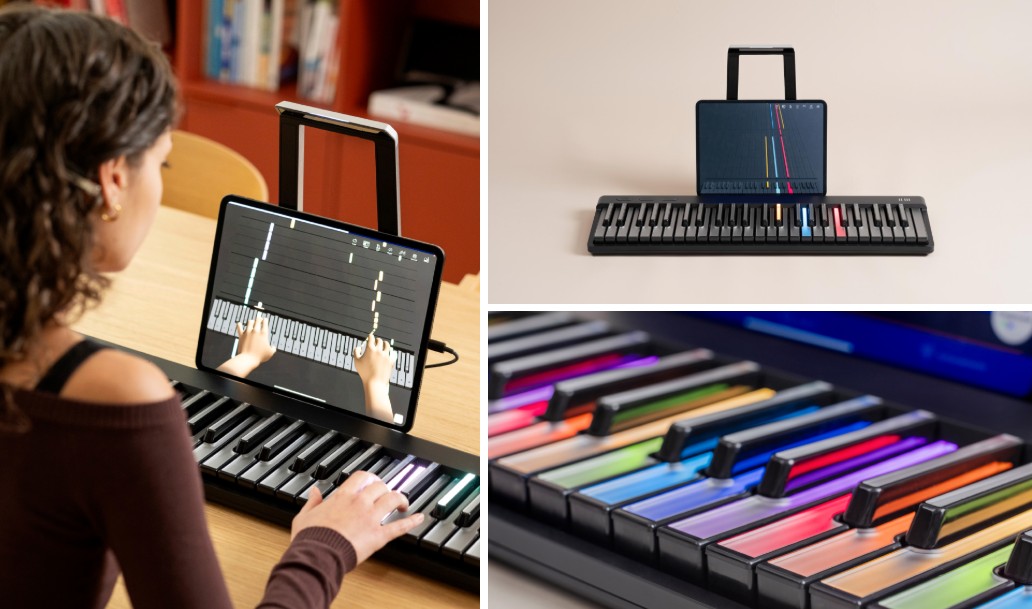
ROLI Piano l Image Credit: UNIST Department of Design, 2026 iF Design
“The convergence of innovative design and advanced AI technology in this project exemplifies UNIST’s commitment to shaping the future of education and creative expression,” remarked Professor Eom. “Building upon our strengths in digital design and artificial intelligence, we aim to establish new benchmarks in personalized music learning that will resonate globally.”
ROLI’s enduring partnership with UNIST, spanning three years, exemplifies a shared vision of fostering industry-leading innovation through strategic academia-industry collaboration. This alliance continues to produce transformative tools that redefine the boundaries of musical education and creative exploration.
This remarkable achievement affirms UNIST’s status as a global leader in integrating design, artificial intelligence, and musical technology—paving the way for personalized, data-driven learning experiences that expand access and opportunity for musicians worldwide.